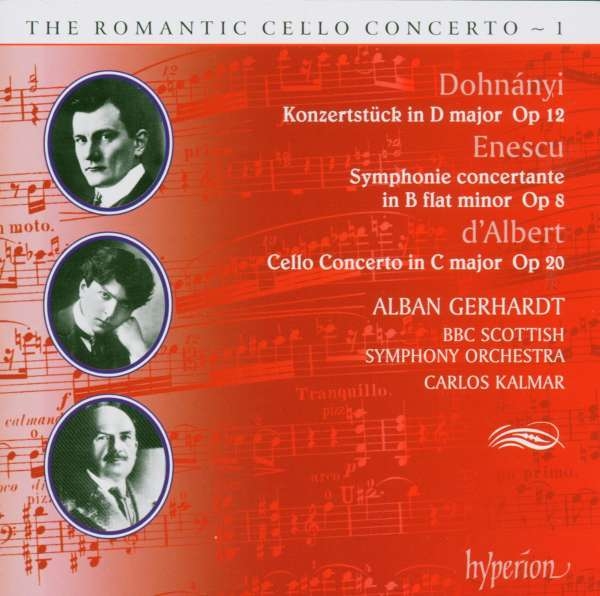
Dohnányi / Enescu / d'Albert: The Romantic Cello Concerto
18,00 €
Formát:
CD
Dostupnosť:
dodacia doba 7-28 dní
Katalógové číslo:
CDA67544
EAN kód:
34571175447
Autori:
Ernő Dohnányi, Eugen d Albert, George Enescu
Interpreti:
Alban Gerhardt, BBC Scottish Symphony Orchestra, Carlos Kalmar
Zoznam skladieb
Ernő Dohnányi: Konzertstück für Cello und Orchester D-Dur op. 121 1. Allegro non troppo
2 2. Adagio
3 3. Tempo 1, ma molto più tranquillo
George Enescu: Sinfonia concertante op. 8 (für Violoncello und Orchester)
4 1. Assez lent - Un peu plus animé
5 2. Tempo 1
6 3. Majestueux - Plus vite
Eugen d'Albert: Konzert für Violoncello und Orchester C-Dur op. 20
7 1. Allegro moderato - Animato - Allegro - Molto tranquillo
8 2. Andante con moto
9 3. Allegro vivace - Allegro molto
Popis
Hyperion is delighted to introduce the highly sought-after German cellist Alban Gerhardt to the label with these dazzling performances of three cello concertos written within the span of five years either side of the close of the nineteenth century. This disc is a fitting start to Hyperion's new series of Romantic Cello Concertos; a follow-up to the highly successful Romantic Piano
Concerto series and Romantic Violin Concerto series. The Slovak-born Dohnányi grew up with the sound of the cello in his ears – his father was an excellent amateur cellist – and his understanding of instrument shows in his Konzertstück Op 12; its lyricism and emotional urgency suggest an acquaintance with Mahler's music but there is also more than a hint of Brahms and a splashing of Hungarian folksong. The Symphonie concertante, Op 8 is an astonishingly assured composition produced by the Romanian-born George Enescu in his late teens. The piece is an innovative and virtuosic masterpiece, with luminous orchestral textures. The talented composer was also a fine cellist. D'Albert was born in Glasgow in 1864 into a prestigious family. His ancestors included the composer Domenico Alberti, after whom the Alberti bass takes its name, and his paternal grandfather was an adjutant to Napoleon I. He was taught composition by Arthur Sullivan and his pianistic skills were hailed by none other than Liszt when he went to study with the great master in Vienna. His cello concerto, written in 1899, is unusual in that it opens with the principal theme played by the oboe and then clarinet before finally passing to the soloist. Interestingly all three composers use the single-movement structure subdivided into sections of differing tempi created by Liszt in his symphonic poems. As befits a solo instrument of such vocal quality, long lines of unfolding melody are common to all the works, and all are beautifully ›sung‹ by the soloist accompanied by stalwarts of the Concerto repertoire, the BBCSSO, on top form as ever.