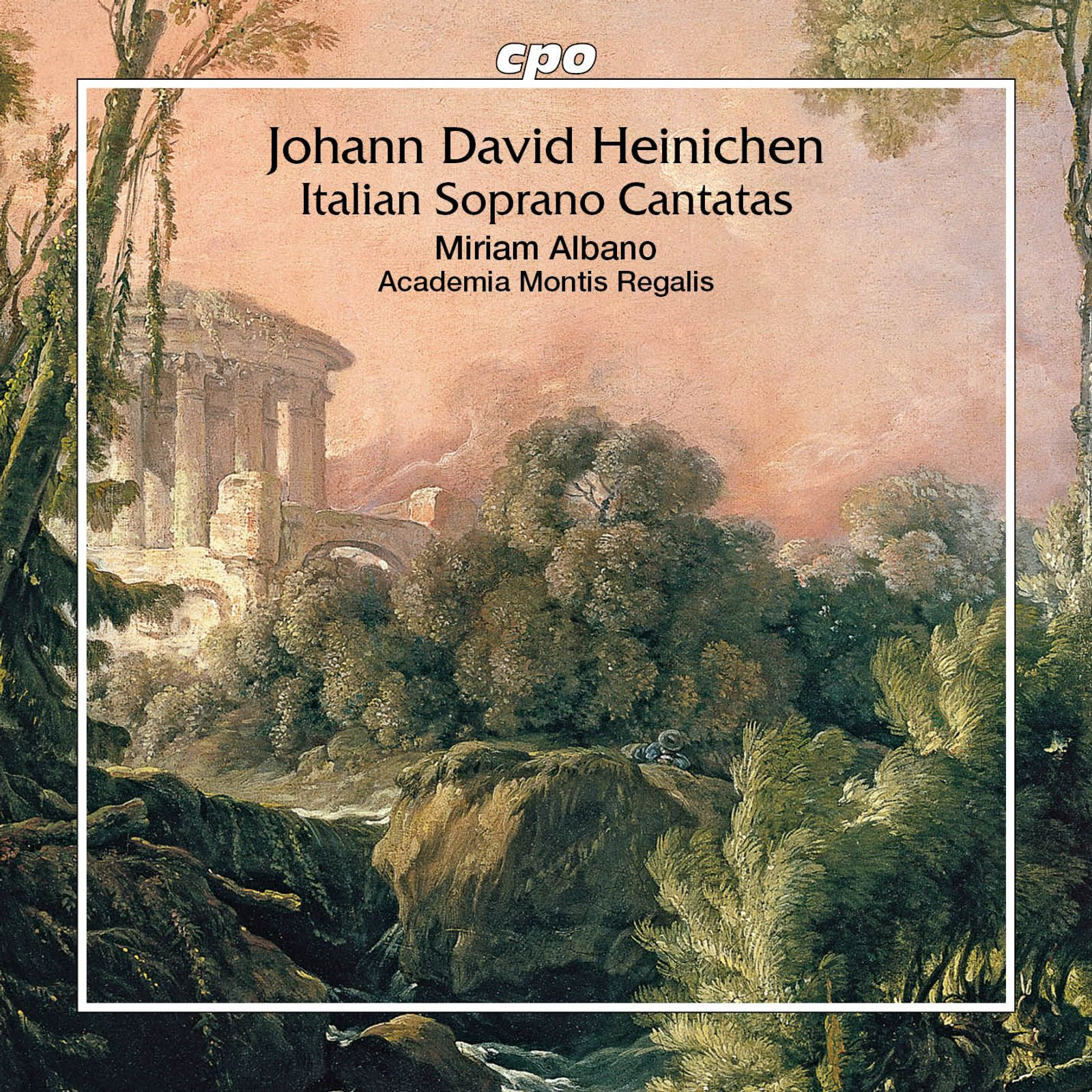
Heinichen: Italian Soprano Cantatas
13,00 €
Formát:
CD
Dostupnosť:
na sklade / in stock
Katalógové číslo:
555668-2
EAN kód:
761203566822
Autori:
Johann David Heinichen
Interpreti:
Academia Montis Regalis, Miriam Albano
Vydavateľ:
CPO
Zoznam skladieb
Dátum vydania: 05.06.2026Kantate "La Virtu nel giorno di Gioseffa"
1
Recitativo: Fosche tenebre e dense
2
Aria: Dove il cielo
3
Recitativo: In me fissate
4
Aria: Per opre leggiadre
5
Recitativo: E se d'esempio i vostri cori
6
Aria: Alle tarde età lontane
Cantata nel giorno di Christiano
7
Aria: Di giubilo tutto abbondo di gioia
8
Recitativo: Per mirar Christiano illustre
9
Aria: La bella tortorella
10
Recitativo: O quanto piacere a tutti
11
Aria: Già sento contento
12
Recitativo: Glorioso Prence
Kantate "Gia la stagion novella"
13
Recitativo: Già la stagion novella
14
Aria: Scherza lʼaura e ride il prato
15
Recitativo: Così in dolce favella
16
Aria: Occhi cari
Kantate "Dori, vezzosa Dori"
17
Recitativo: Dori, vezzosa Dori
18
Aria: Dolce sonno del mio ben
19
Recitativo: Goder pladico
20
Aria: Viver non so contento
21
Recitativo: O, se un tuo bel sospiro
22
Aria: Sento che dice Amor
Kantate "Lieve turbe canora"
23
Recitativo: Lieve turba canora
24
Aria: Chi chiedesse allʼaugelletto
25
Recitativo: Spinto da un bel desio
26
Aria: Non perché veda di strano aspetto
Popis
Around the same time as George Frideric Handel, Johann David Heinichen, a student of St. Thomas's in Leipzig, embarked on a great journey to Italy in 1710. Having studied law, he could no longer resist his urge for music and was promptly rewarded handsomely for his "grand tour": the current musical trends swept him away, the music of Antonio Vivaldi, Alessandro Scarlatti and Francesco Gasparini had a direct effect on him, while the old masters such as Monteverdi and Carissimi had an indirect effect - and when he returned home in 1716, he was no longer the same. He soon became Kapellmeister of the Dresden court, which he enriched with relevant contributions until the early end of his life (1729). Among other things, Heinichen left behind around five dozen solo cantatas: five of these enchanting, pocket-sized operatic scenes inspired by Italy form the program of this production, whose soloist masters the tonal theory of affects in all its facets.