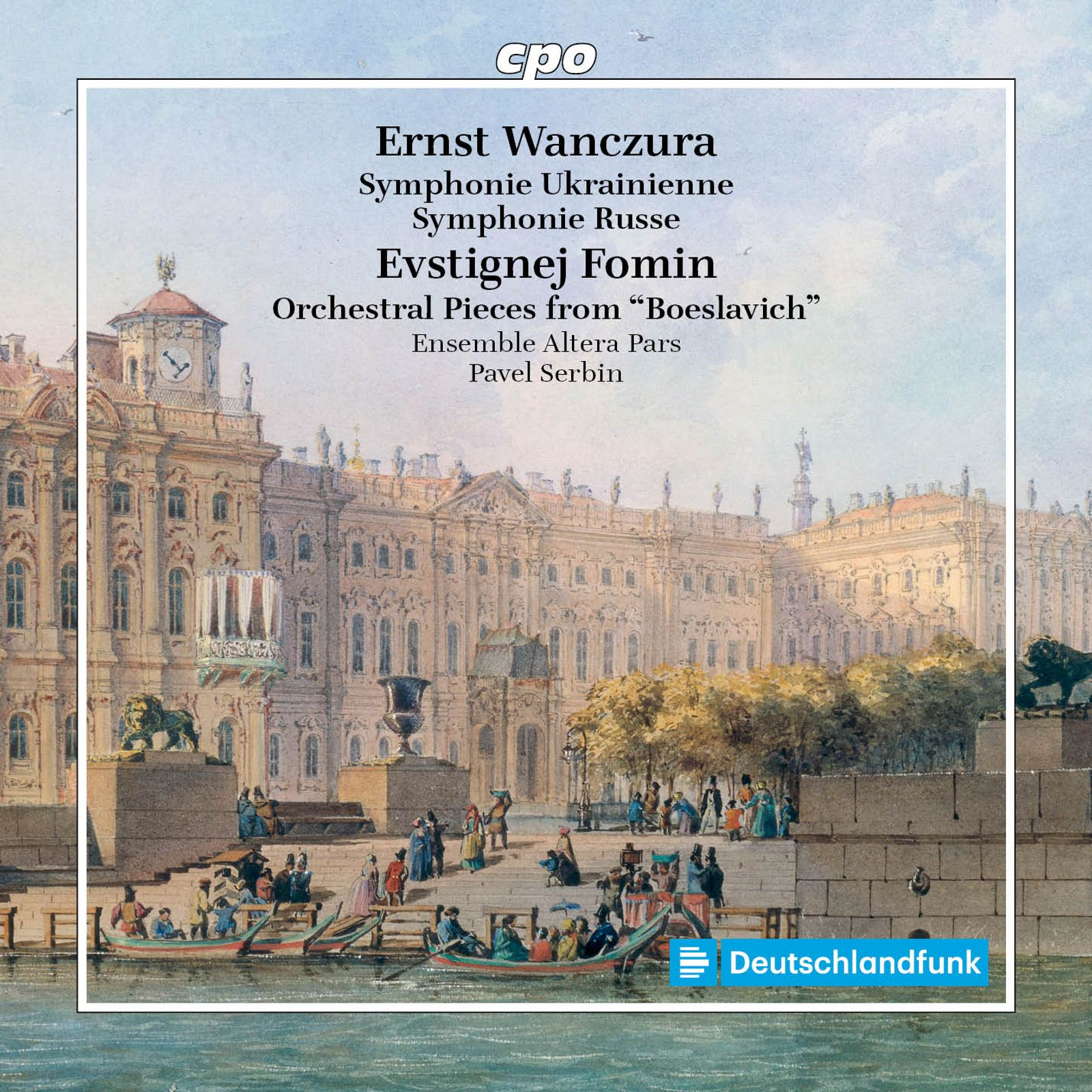
Wanczura: Symphonie Ukrainienne & Symphonie Russe - Fomin: Orchestral Pieces from “Boeslavich”
13,00 €
Formát:
CD
Dostupnosť:
na sklade / in stock
Katalógové číslo:
555741-2
EAN kód:
761203574124
Autori:
Ernst von Wanczura, Evstignej Fomin
Interpreti:
Ensemble Altera Pars, Pavel Serbin
Vydavateľ:
CPO
Zoznam skladieb
Dátum vydania: 05.06.2026Evstignej Fomin: Novgorodskij bogatyr’ Boeslavich (1786)
1
Sinfonia. Allegro
2
Ballo. Lento – Con moto
3
Antract. Lento
4
Ballo. Andante
5
Ballo. Lento cantabile - Andantino
Ernst Wanczura: Symphonie Russe sur l’Airs Ukrainiennes C-Dur
6
1 Allegro
7
2 Andante
8
3 Rondo
Evstignej Fomin: Novgorodskij bogatyr’ Boeslavich (1786)
9
Antract. Adagio
10
Divertimento. Allegretto
11
Ballo. Andantino staccato
12
Ballo. Allegro
13
Ballo. Lento
14
Ballo. Andante affettuoso
Ernst Wanczura: Symphonie Russe D-Dur
15
1 Allegro moderato
16
2 Adagio cantabile
17
3 Rondo
Evstignej Fomin: Novgorodskij bogatyr’ Boeslavich (1786)
18
Antract. Vivace
19
Ballo. Marcia
20
Ballo. Maestoso
21
Ballo. Adagio
22
Ballo. Andantino affettuoso
23
Ballo. Maestoso
24
Ballo Ultimo. Comodo
Popis
History teaches us that we should be wary of attaching such absolute epithets as "inventor of ..." or "father or mother of ..." to any personalities - no matter how important they may be - whereby the gaps are to be filled with every conceivable phenomenon from string quartets to films. For it happens again and again that deeper excavations make revisions necessary - as in this case, where two new fathers of Russian music suddenly relegate the younger Mikhail Glinka and the Mighty Little Bunch to the back seats. The Bohemian Ernst Wanczura (pronounced Wantschura), who was born ten years before Mozart and ended up in St. Petersburg, was possibly the first composer to use folk songs in his delightful Symphonies op. 1 and op. 2. His colleague Fomin, fifteen years his junior, with the beautiful first name and patronymic Yevstigny Ipatovich, a pupil of the famous Bolognese composer Padre Martini at state expense, was particularly successful on the stage: his melodramas and operas are veritable parabolic mirrors in which Italian, Russian and Western stylistic features come together to form a characteristic expression that could undoubtedly have become an important element if Fomin had been granted a longer life.