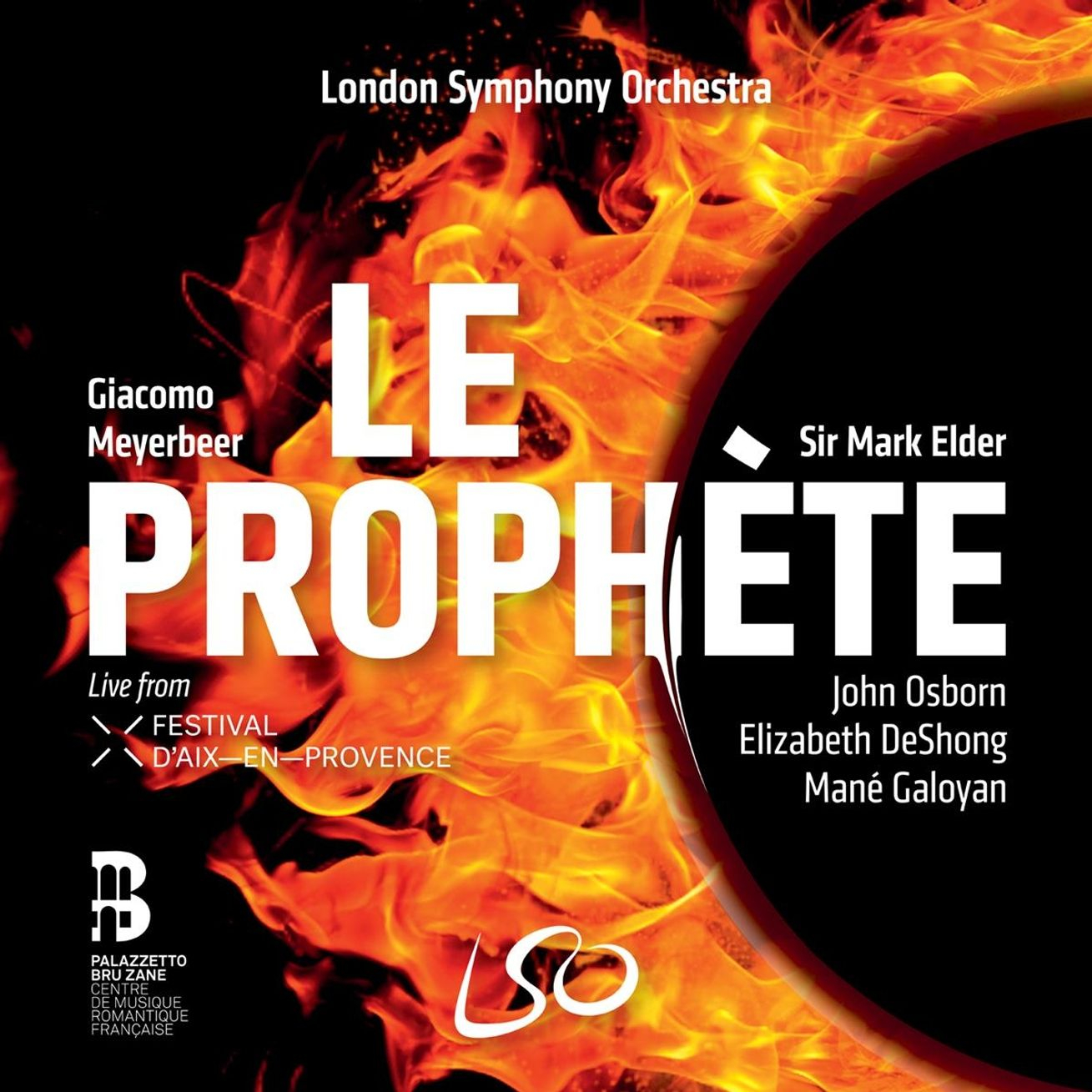
Meyerbeer: Le prophète (3SACD)
33,00 €
Formát:
SACD
Dostupnosť:
backorder/ dodacia doba 7-14 dní
EAN kód:
0822231189428
Autori:
Giacomo Meyerbeer
Interpreti:
Elizabeth DeShong, John Osborn, London Symphony Orchestra, Mané Galoyan, Sir Mark Elder
Vydavateľ:
LSO
Zoznam skladieb
Disc 1Acte I
1 No. 1a, Prélude et chour pastoral. "La brise est muette"
2 No. 1 bis (A), Cavatine. "Voici l'heure où sans alarmes"
3 No. 2, Scène (après la Cavatine). "Fidès, ma bonne mère"
4 No. 3a, Récitatif. "Quels sont ces hommes noirs"
5 No. 3b, Le Prêche anabaptiste. "Ad nos, ad salutarem undam"
6 No. 3b, Le Prêche anabaptiste. "Ainsi ces beaux châteaux?"
7 No. 4a, Récitatif. "Le comte d'Oberthal, le seigneur châtelain!"
8 No. 4b, Romance. "Un jour dans les flots de la Meuse"
9 No. 5, Récitatif et Final. "Eh quoi"
Acte II
10 No. 6, Valse villageoise. "Valsons toujours"
11 No. 7, Le Récit du songe. "Ami, quel nuage obscurcit ta pensée?"
12 No. 8, Pastorale. "Pour Berthe moi je soupire"
13 No. 9, Scène. "Il partent!"
14 No. 10, Arioso. "Ah! Mon fils"
15 No. 11a, Scène. "O fureur!"
16 No. 11b, Quatuor. "Gémissant sous le joug"
17 No. 11b, Quatuor. "Et la couronne"
Disc 2
Acte III
1 No. 12a, Entracte.
2 No. 12b, Chour des anabaptistes. "Du sang!"
3 No. 13a, Couplets de Zacharie. "Aussi nombreux"
4 No. 13b, Scène. "Voici la fin du jour!"
5 No. 14a, L'Arrivée des patineurs. "Voici les fermières"
6 No. 14b, Pantomime.
7 No. 15a, Premier Air de ballet. Valse.
8 No. 15b, Deuxième Air de ballet. Pas de la Redowa.
9 No. 15c, Troisième Air de ballet. Quadrille des patineurs.
10 No. 15d, Quatrième Air de ballet. Galop.
11 No. 15e, Scène (après la danse). "Livrez vous au repos, frères"
12 No. 16b, Scène. "Quel air pensif et soucieux"
13 No. 17, Chour des soldats révoltés. "Par toi Münster, nous fut promis"
14 No. 18a, Scène. "Qui vous a, sans mon ordre"
15 No. 18b, Prière. "Dieu puissant!"
16 No. 18c, Récitatif. "Grand Prophète, ton peuple se relève et tu règnes!"
17 No. 19, Hymne triomphal. "A Münster! Roi du ciel et des anges"
Acte IV
18 No. 21, Complainte de la mendiante. "Donnez pour une pauvre âme"
19 No. 22a, Scène. "Un pauvre pèlerin!"
20 No. 22b, Duo. "Pour garder à ton fils"
21 No. 22b, Duo. "Un matin"
Disc 3
1 No. 23, Marche du sacre.
2 No. 24a, Finale. Prière et imprécation. "Domine, salvum fac"
3 No. 24b, Chour d'enfants et chour général. "Le voilà, le Roi Prophète!"
4 No. 24c, Couplets et morceau d'ensemble. "Je suis, hélas"
5 No. 24d, L'Exorcisme. "Arrêtez!"
Acte V
6 No. 25, Entracte et Scène. "Ainsi vous l'attestez?"
7 No. 26a, Scène. "O prêtres de Baal"
8 No. 26b, Cavatine. "O toi qui n'abandonnes"
9 No. 26c, Air. "Femme, prosterne-toi"
10 No. 27, Scène et Grand Duo. "Ma mère!"
11 No. 27, Scène et Grand Duo. "Eh bien!"
12 No. 28a, Scène. "Voici le souterrain!"
13 No. 28b, Trio. "Ah! Combien ma douleur fut amère"
14 No. 28b, Trio. "O spectre épouvantable!"
15 No. 28c, Récitatif. "Morte! Partez!"
16 No. 29a, Finale. Bacchanale. Chour dansé. "Hourra!"
17 No. 29b, Couplets bachiques. "Versez! Que tout respire"
Popis
Spectacular sensational success
Giacomo Meyerbeer's opera Le Prophète, which premiered at the Opéra National in Paris in 1849, is loosely based on a true story from the time of the Anabaptist movement in the 16th century: A charismatic innkeeper is converted to Anabaptism by itinerant preachers. Having become a preacher himself, this John of Leiden comes to Münster, where he soon establishes a tyrannical theocracy. Among other things, he renames the city Jerusalem, abolishes private property and proclaims himself king before he is finally killed during an imperial intervention. With the other ingredients, a combative bride, probably the most impressive mother figure ever to be seen on an opera stage and effective mass scenes, Le Prophète ultimately became one of the prime examples of a grand opéra.
It was indeed a spectacular, large-scale work which, like Robert Le Diable before it, became a real sensation at its lavishly staged premiere, finally making the Paris Opera the leading stage in Europe and Meyerbeer a globally celebrated composer who was admired and envied by the greatest. The premiere was also remarkable because electric lighting was used for the first time in an opera performance to depict a sunrise. Furthermore, on the day of the premiere, the French parliamentary assembly was not quorate because too many of the deputies preferred to sit in the opera ...
On this album, recorded live at the Festival d'Aix-en-Provence in 2023 as one of the highlights of the festival, the London Symphony Orchestra under conductor Sir Mark Elder and an excellent line-up of soloists bring Meyerbeer's visionary historical drama to life.