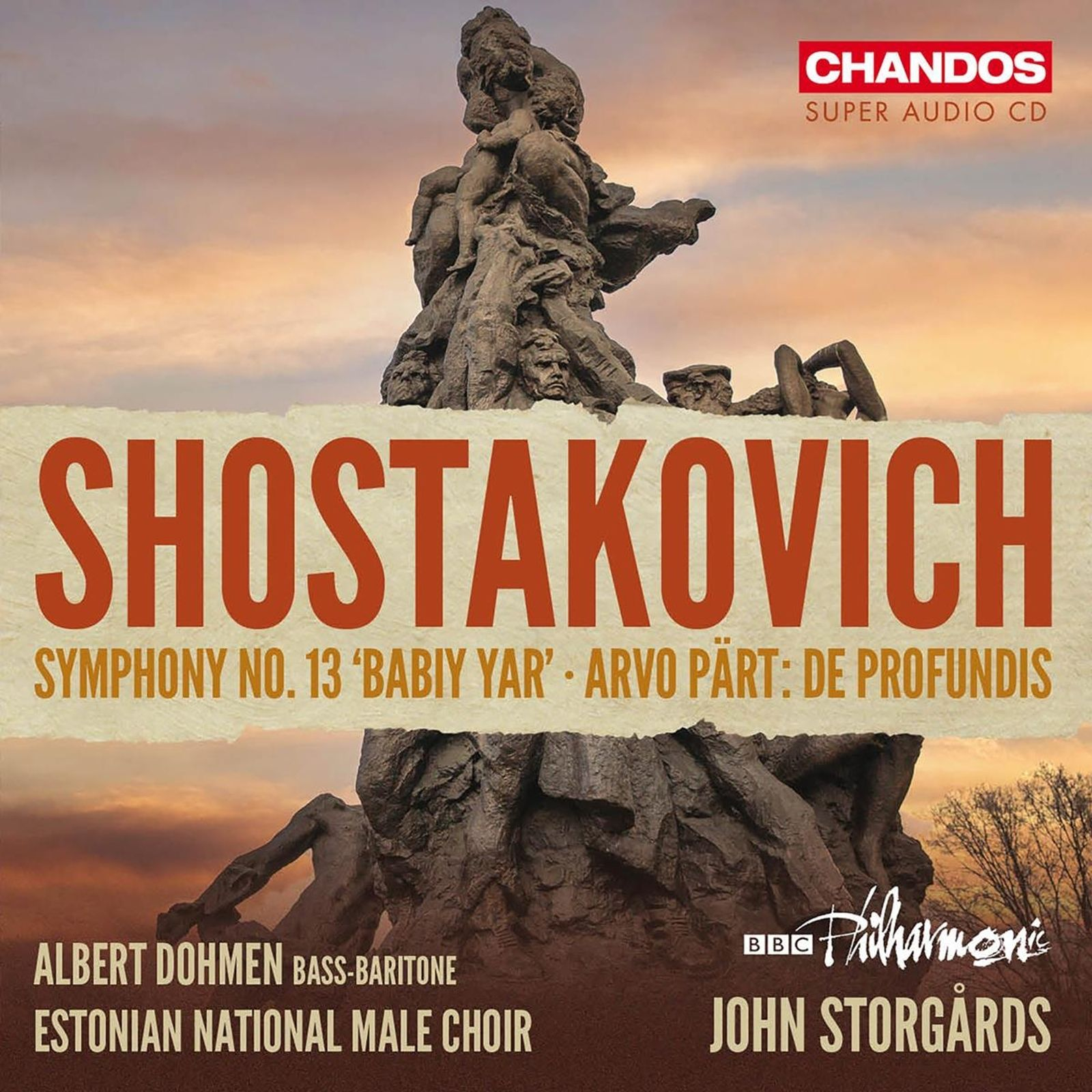
Shostakovich: Symphony No. 13; Arvo Part: de Profundis (SACD)
19,99 €
Formát:
SACD
Dostupnosť:
na sklade / dostupné okamžite
Katalógové číslo:
CHSA5335
EAN kód:
095115533529
Autori:
Arvo Pärt, Dmitri Shostakovich, Dmitrij Šostakovič
Interpreti:
BBC Philharmonic Orchestra, Estonian National Male Choir, John Storgårds
Vydavateľ:
CHANDOS
Zoznam skladieb
Dátum vydania: 2024Pärt: De profundis
Work length 6:55
Estonian National Male Choir, BBC Philharmonic, John Storgårds
Shostakovich: Symphony No. 13 in B flat minor, Op. 113 'Babi Yar'
Work length 1:02:34
Albert Dohmen, Estonian National Male Choir, BBC Philharmonic, John Storgårds
I. Babi Yar
II. Humour
III. In the Store
IV. Fears
V. Career
Popis
John Storgårds’s acclaimed series of Shostakovich symphonies continues with this recording of Symphony No. 13. The BBC Philharmonic is joined by the bass-baritone Albert Dohmen and the Estonian National Male Choir. The symphony, subtitled ‘Babiy Yar’, caused a great deal of tension and controversy in the lead-up to its première, in December 1962 – not because of the music, but the poetry. Shostakovich had chosen to set Yevgeny Yevtushenko’s Babiy Yar. Ostensibly an outraged response to the lack of a memorial for the thousands of Jews murdered by the Nazis and dumped in a ravine near Kyiv, the poem implicitly criticised the anti-Semitism then still rife in the Soviet Union. Originally planned as a short cantata, the work grew in stature as Shostakovich chose additional poems by Yevtushenko for inclusion, finally settling on the form of a five-movement symphony. The tone of the poems was as near to being openly subversive as any Soviet literary material could be at the time without actually being banned by the authorities, but the eventual première was a triumph. Arvo Pärt’s De profundis was composed for male voices, organ, and percussion in 1980. Here we hear the composer’s later adaptation of the piece for male voices and chamber orchestra, from 2008. The short work is a perfect example of the style the composer termed ‘tintinnabuli’ and an aesthetic that others would later label ‘holy minimalism’.