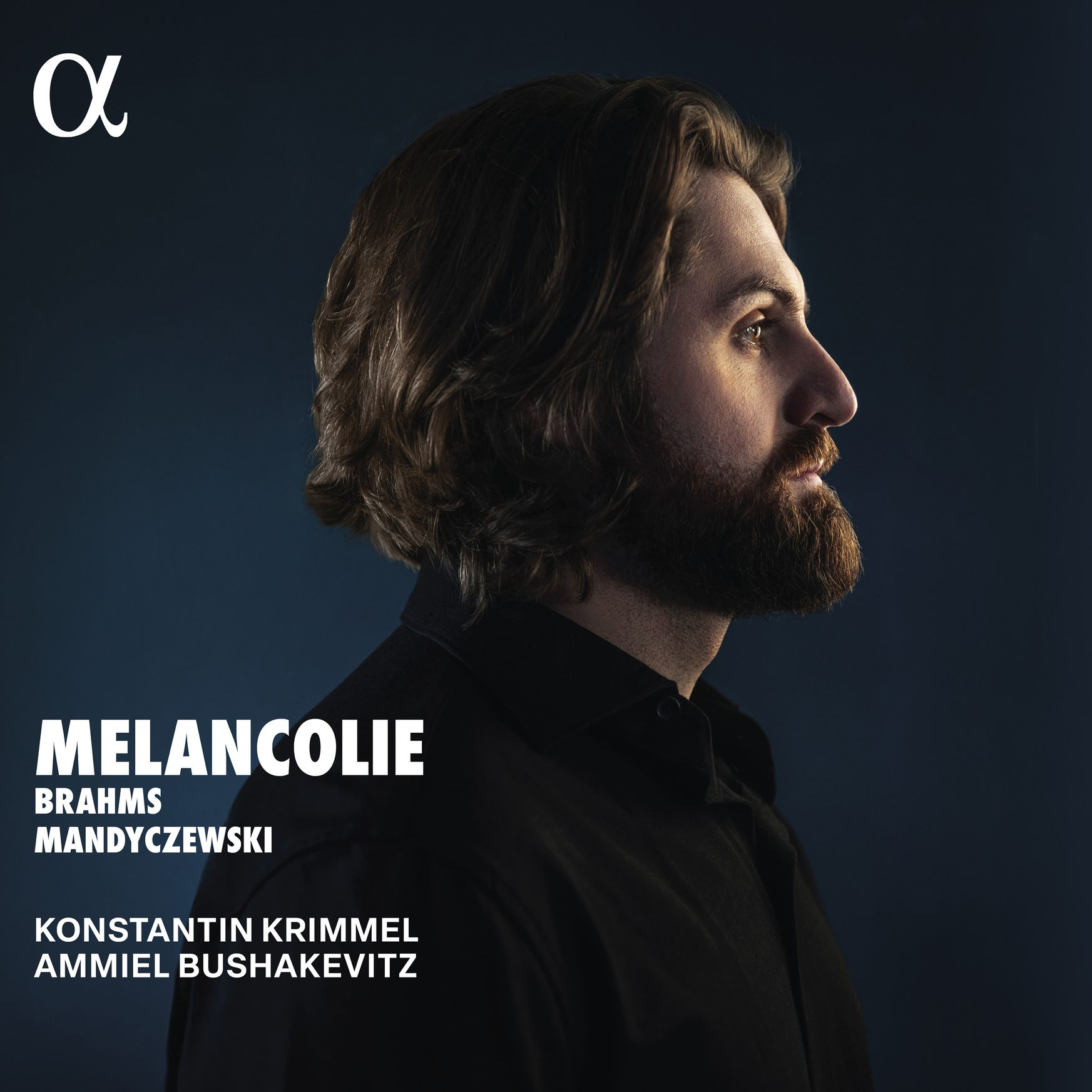
Melancolie (Brahms / Mandyczewski)
16,00 €
Formát:
CD
Dostupnosť:
backorder/ dodacia doba 7-14 dní
Katalógové číslo:
ALPHA1258
EAN kód:
3701624512586
Autori:
Eusebius Mandyczewski, Johannes Brahms
Interpreti:
Ammiel Bushakevitz, Konstantin Krimmel
Vydavateľ:
ALPHA
Zoznam skladieb
Dátum vydania: 28. 8. 2026Johannes Brahms
1 49 German Folk Songs, WoO 33: No. 29, Es war ein Markgraf überm Rhein
2 5 Lieder, Op. 105: No. 4, Auf dem Kirchhofe
3 8 Lieder und Gesänge, Op. 57: No. 8, Unbewegte laue Luft
Eusebius Mandyczewski: Cântece romăneşti, Op. 7
4 No. 3, Lăcrimioare
5 No. 1, La o copiliță
6 Op. 7: No. 15, O Zi
Johannes Brahms
7 4 Lieder, Op. 96: No. 3, Es schauen die Blumen
8 4 Gesänge, Op. 43: No. 2, Die Mainacht
9 4 Lieder, Op. 96: No. 4, Meerfahrt
10 6 Gesänge, Op. 3: No. 4, Lied aus dem Gedicht Ivan
Eusebius Mandyczewski
11 Fa Mariţă
Cântece romăneşti, Op. 7
12 No. 17, Cinel-cinel
13 No. 5, Primăvara cea verzie
14 No. 12, În zadar!
Johannes Brahms
15 6 Lieder, Op. 85: No. 1, Sommerabend
16 6 Lieder, Op. 85: No. 2, Mondenschein
17 5 Gesänge, Op. 72: No. 3, O kühler Wald
18 4 Gesänge, Op. 70: No. 2, Lerchengesang
Eusebius Mandyczewski: Cântece romăneşti, Op. 7
19 No. 7, Mândruliţă
20 No. 9, Frumoasă copiliţă
21 No. 13, Senin şi furtună
Johannes Brahms
22 4 Lieder, Op. 96: No. 1, Der Tod, das ist die kühle Nacht
23 4 Lieder, Op. 46: No. 4, An die Nachtigall
24 6 Lieder, Op. 86: No. 2, Feldeinsamkeit
Eusebius Mandyczewski: Cântece romăneşti, Op. 7
25 Op. 7: No. 16, Mormântul
26 No. 18, Omul singuratic
Popis
“Having a choice of roots is always an asset. Growing up multilingual fosters cognitive flexibility… I was lucky enough to live between Romania and Germany,” says Konstantin Krimmel. Together with his longtime musical partner Ammiel Bushakevitz, who also has “mixed roots”, he sought to bring together the composers Johannes Brahms (1833–1897) and Eusebius Mandyczewski (1857–1929), who met in Vienna in the late 1870s and maintained a close friendship: on the one hand, the established composer from faraway Hamburg, author of nearly 200 Lieder and vocal works; on the other, the young student from distant Bukovina, son of an Orthodox priest, who grew up immersed in the Romanian of his mother’s side and the Ukrainian of his father’s, a pupil of a Mendelssohn disciple. His eighteen Romanian Songs were published in 1885 in a bilingual Romanian-German edition, based on texts by Vasile Alecsandri (1821–1890), “a magnificent poet who wrote in a highly evocative style that has deep connections with nature. A nature that I love and from which I draw upon as a source of interpretation in every recital,” says Krimmel. They are recorded here for the first time in their original language, Romanian. The two composers also share a love of Schubert—Mandyczewski was the first publisher of his complete works—a fascination with folk songs, and a taste for melancholy, which is felt throughout this programme.