

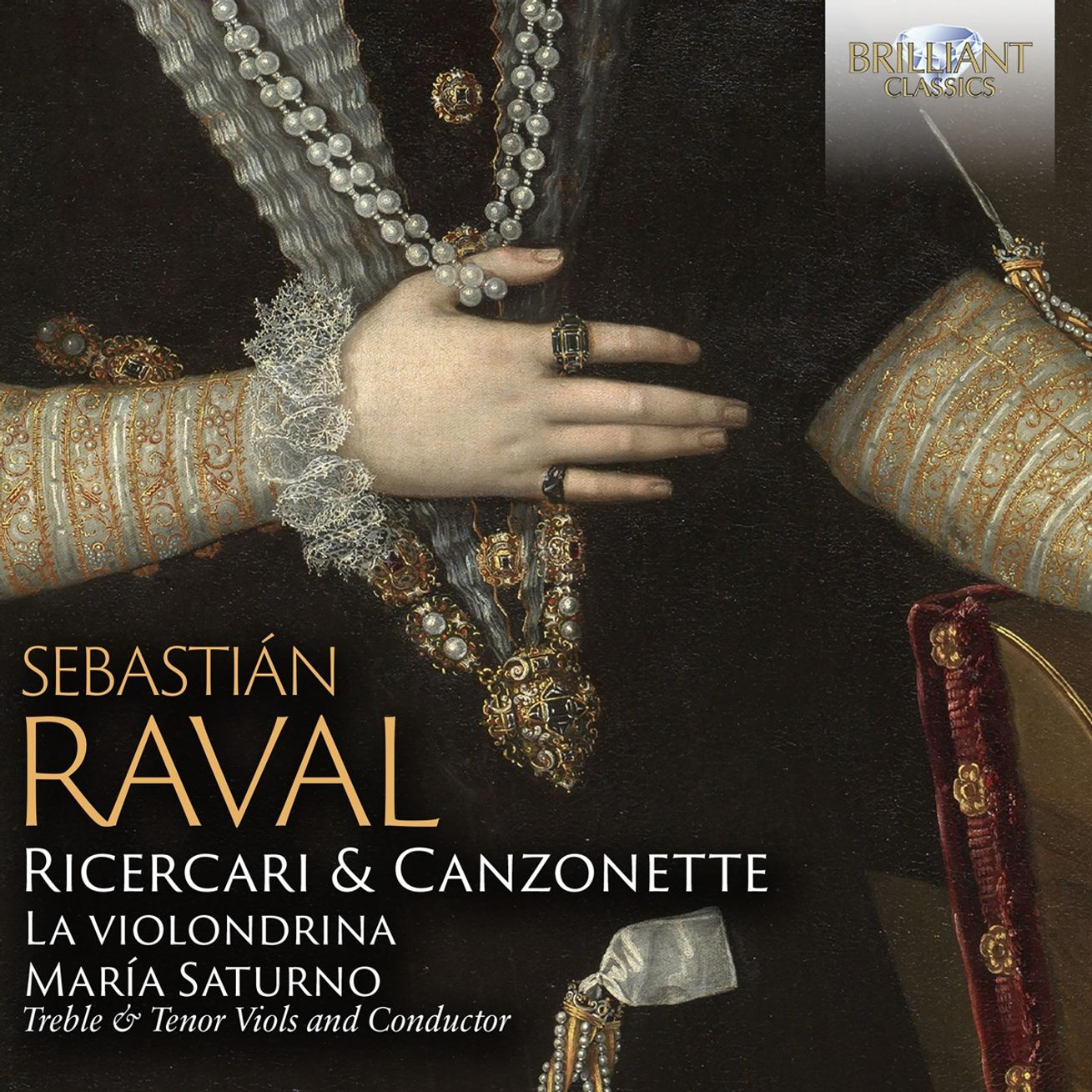
Raval: Ricercari & Canzonette
12,00 €
Formát:
CD
Dostupnosť:
7-14 dní
Katalógové číslo:
97226
EAN kód:
5028421972268
Autori:
Sebastián Raval
Interpreti:
La Violondrina
Vydavateľ:
BRILLIANT CLASSICS
Zoznam skladieb
Disk 1
1
Sebastián Raval: Qual fenice morendo
2
Sebastián Raval: Ricercar del sesto tono naturale
3
Sebastián Raval: S’el fuoco me lontan
4
Sebastián Raval: Ricercar del decimo tuono
5
Sebastián Raval: Viderunt te aque deus per organum
6
Sebastián Raval: Valor heroico son
7
Sebastián Raval: Ricercar del nono tuono
8
Sebastián Raval: Chiari zaffir son gl’occhi
9
Sebastián Raval: Ricercar del primo tuono
10
Sebastián Raval: Ondeggiavano a l’aura
11
Sebastián Raval: Se per un solo scherno (Instrumental Version)
12
Sebastián Raval: De stelle nelle chiome
13
Sebastián Raval: Ricercar del primo tono, trasportato in quattro fughe d’accordo
14
Sebastián Raval: Corri alma mia
15
Sebastián Raval: Ricercar del secondo tono, trasportato in quattro fughe d’accordo
16
Sebastián Raval: Dimmi se cieco sei
17
Sebastián Raval: Ricercar del terzo tono naturale
18
Sebastián Raval: E come veggio la mia morte
19
Sebastián Raval: Ricercar del undecimo tono, trasportato in quattro fughe d’accordo
Popis
This recording fills a gap in our understanding of Sebastián Raval (ca. 1550-1604), a composer who achieved little posthumous fame. He was of noble birth and was born on an unknown date in the region of Murcia (possibly in Cartagena). He fought with the Spanish Tercios in Flanders at the Siege of Maastricht (1579) and retreated to Italy badly wounded, where he became a monk and worked as a musician.
Although there were many noble musicians in the 16th century, they were marginalized by the assumption of a certain dilettantism in the general historical narrative. Furthermore, following a musical dispute with the Sicilian composer Achille Falcone, Raval was unfairly portrayed by partisan critics as arrogant and untalented, a view that persisted in Italian historiography, while he was largely ignored in Spain (most likely due to a career spent outside his homeland).
But the canzonette on this album dispels any doubts about Raval's talent. Canzonette - and Raval's in particular - is a light genre, setting anonymous texts inspired by Petrarch in madrigal style. They are full of love themes. Although this genre was not prone to musical experimentation, there is some development from the classical canzonette of Orazio Vecchi (in the 1580s) to later examples by Luca Marenzio; Raval's compositions, written in his pre-Roman period, lie in between.
The choice of four voices with high tessituras and a baritone follows Vecchi's style. However, Raval uses a more imitative language and is closer to Marenzio in this respect, without reaching his declamatory style.
Raval's Ricercari book is not only the only one composed by a Spanish musician; its contents reveal a rare contrapuntal ingenuity and a restless, innovative spirit that cannot go unnoticed. The volume came to us by sheer luck. Only one copy of each partbook has been preserved in the archives of Valladolid Cathedral. Thanks to this, we can enjoy this rare music today, not only for its artistry, but also for its subtlety.
Further information:
Recorded in July 2023 in Guadalajara, Spain The booklet in English contains a note on the Canzonettas by Esperanza Rodríguez, a note by the editor of the Ricercars, Andrés Cea Galán, profiles of the ensemble and the conductor as well as the Italian vocal texts.
Sebastián Raval (ca. 1550-1604) was a Spanish composer of vocal and instrumental music. He was born in Cartagena and served as a soldier in the Flanders army in Flanders and Sicily. He joined the Order of St. John of Jerusalem after being wounded at the siege of Maastricht. He moved to Italy, where he served as a musician at the court of Francesco Maria II della Rovere in Urbino, the Viceroy of Sicily, Bernardino de Cárdenas, and Cardinals Peretti and Colonna in Rome.
The canzonettas in this album are clear proof of Roval's talent. They were published in Il primo libro di canzonette a quattro voci (Venice, 1593) and dedicated to the Colonna family. The canzonetta is a light genre with anonymous texts inspired by Petrarch and in madrigalian style, full of themes of love and melancholy. The canzonettas are played in turn by Ricercari.
Beautifully performed by the string ensemble La Violondrina under the direction of María Saturno. María Saturno, Venezuelan-Italian cellist and viola gambist, studied at the University of Musical Studies in Caracas, Venezuela. She has taken part in master classes with Wieland Kuijken, Jordi Savall, Guido Balestracci, Bettina Hoffmann, Vittorio Ghielmi and Juan Manuel Quintana.