 | Telemann: Die Auferstehung & Lyksalig Tvillung-Rige! |
 | Voices in Bratislava - Music from Historic Old Town |
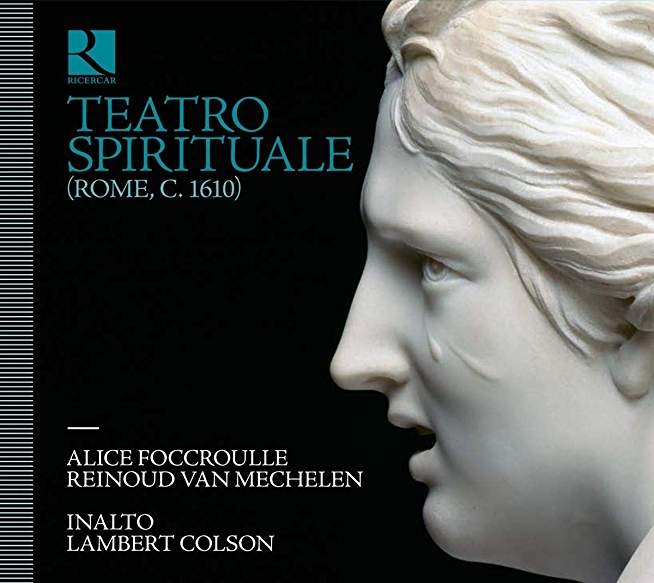
Teatro Spirituale (Rome c. 1610)
15,00 €
Formát:
CD
Dostupnosť:
7-14 dní
Katalógové číslo:
RIC399
EAN kód:
5400439003996
Autori:
Anonym., Emilio de Cavalieri, Giovanni Animuccia, Giovanni de Macque, Giovanni Francesco Anerio, Girolamo Frescobaldi, Luca Marenzio, Quagliati, Soto de Langa
Interpreti:
Inalto, Lambert Colson
Vydavateľ:
RICERCAR
Zoznam skladieb
anon.: De profundis (4 voices, 3 flutes)Inalto
Lambert Colson
Cavalieri: Sinfonia
Inalto
Lambert Colson
Quagliati: Satiati Huomo Carnale
Inalto
Lambert Colson
anon.: Domine ne in furore tuo arguas me
Inalto
Lambert Colson
Anerio, G F: Ritorn'al tuo Pastor Smarrit'agnella
Inalto
Lambert Colson
Soto de Langa: Come Ti Veggio
Inalto
Lambert Colson
Macque: Capriccio sopra re fa mi sol
Inalto
Lambert Colson
Cifra: Emendemus in Melius
Inalto
Lambert Colson
anon.: Domine Exaudi Orationem Meam
Inalto
Lambert Colson
Marenzio: Crudele acerba
Inalto
Lambert Colson
anon.: Miserere, my Maker
Inalto
Lambert Colson
Animuccia: S'alhor Che piu Sperai
Inalto
Lambert Colson
Frescobaldi: Toccata per le Levatione
Inalto
Lambert Colson
anon.: Domine in Furore Tuo
Inalto
Lambert Colson
Frescobaldi: Canzon quinta a 4 (1634)
Inalto
Lambert Colson
Anerio, G F: Signor, Io T'ho Confitto
Inalto
Lambert Colson
Quagliati: Recercata 19 a 4
Inalto
Lambert Colson
Popis
This recording transports us to Rome’s Chiesa Nuova, the Oratory Church where in 1600 the premiere took place of the first spiritual opera, La Rappresentatione di Anima e di Corpo by Cavalieri. That pioneering spirit has inspired this programme devised by InAlto. Among the manuscripts in the church’s library is an anonymous source, probably dating from the very beginning of the 17th century, containing a complete cycle of settings of those seven psalms that ever since the time of Saint Augustine have been called the ‘Penitenial Psalms’. This Roman score is absolutely unique of its kind, being monodic, and composed in the early operatic melodic narrative style of recitar cantando. InAlto presents here a completely original approach, one that puts this early 17th century repertoire in its context by recreating, in the tradition of the Oratorian spiritual exercises, an imaginary ritual that might unfold in the days preceding Holy Week, one in which each of the penitential psalms takes on its full meaning; while the extraordinary musical dissonances encoded in this manuscript are guaranteed to shock the listener…