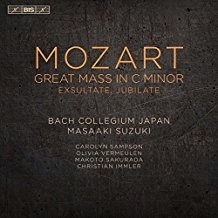
Mozart: Mass in C minor, K427 'Great' (SACD)
17,90 €
Formát:
SACD
Dostupnosť:
7-14 dní
Katalógové číslo:
BIS2171
EAN kód:
7318599921716
Autori:
Wolfgang Amadeus Mozart
Interpreti:
Bach Collegium Japan, Carolyn Sampson, Christian Immler, Makoto Sakurada, Masaaki Suzuki, Olivia Vermeulen
Vydavateľ:
BIS
Zoznam skladieb
Mozart:Mass in C minor, K427 'Great'
Olivia Vermeulen (mezzo), Makoto Sakurada (tenor), Christian Immler (bass)
Exsultate, jubilate, K165
from the revised Salzburg version of K165
Carolyn Sampson (soprano)
2016 (Hybrid SACD)
Popis
Following on from the 2015 release of Mozart’s Requiem, Masaaki Suzuki and his Bach Collegium Japan have gone on to record the composer's Mass in C minor, K427 – the ‘Great Mass’. As the nickname indicates, it is a work of unusual proportions for a mass of the Classical period – or would have been so, had Mozart completed it. It is not known, for what occasion Mozart intended the work, but a letter to his father Leopold, dated 4 January 1783, indicates that he may have committed himself to writing it in connection with his marriage to Constanze and a planned visit to Salzburg. A performance of parts of the Mass did take place in Salzburg in October 1783, with Constanze performing the prominent soprano part. Two years later Mozart reused the music from the Kyrie and Gloria sections in the sacred cantata Davidde penitente, K 469, but the Mass itself was left incomplete. The present performance includes the sections completed by Mozart himself, as well as those sections, for which extensive sketches by Mozart provided a basis for completion (by Franz Beyer in 1989). Three of Suzuki’s soloists also took part in the recording of the Requiem, while the Dutch mezzo-soprano Olivia Vermeulen makes her first appearance on BIS, shining in the aria ‘Laudamus te’. The disc closes with the celebrated cantata Exsultate, jubilate in which the soprano Carolyn Sampson glitters in the virtuosic solo part. As an appendix to the programme, she and the Bach Collegium Japan orchestra also repeats the initial aria, in a less well-known later version with a slightly different text and with flutes replacing the oboes of the original.