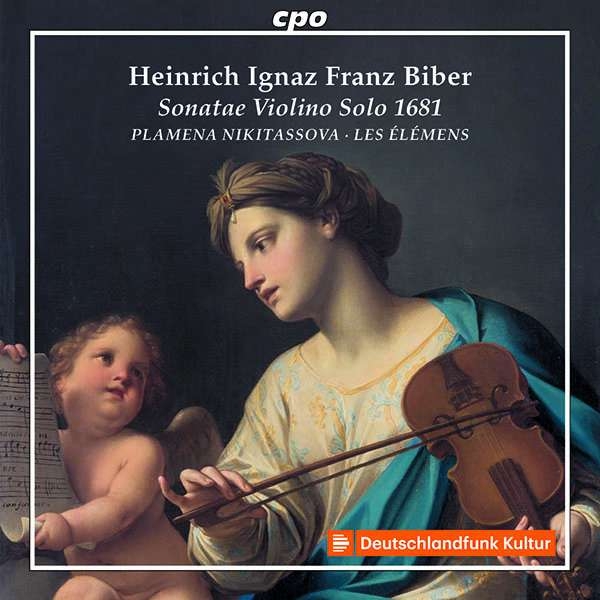
Biber: Sonatae Violino Solo 1681 (2CD)
18,00 €
Formát:
CD
Dostupnosť:
na sklade / dostupné okamžite
Katalógové číslo:
555 481-2
EAN kód:
761203548125
Autori:
Heinrich Ignaz Franz Biber
Interpreti:
Les Élémens, Plamena Nikitassova
Vydavateľ:
CPO
Zoznam skladieb
CD 1: Sonatas I-IVSonata No. 1 in A Major, C. 138
1 I.
2 II. Adagio
3 III.
4 IV. Presto
5 V. Presto
6 VI. Finale
7 VII. Presto
Sonata No. 2 in D Minor, C. 139
8 I.
9 II. Aria
10 III. Adagio
11 IV.
12 V. Finale
Sonata No. 3 in F Major, C. 140
13 I. Adagio
14 II. Adagio
15 III. Aria
16 IV. Forte presto
17 V. Adagio
18 VI.
Sonata No. 4 in D Major, C. 141
19 I.
20 II. Presto
21 III. Gigue
22 IV. Adagio
23 V. Aria
24 VI. Finale
CD 2: Sonatas V-VIII & Vilsmayr Sonata
Sonata No. 5 in E Minor, C. 142
1 I.
2 II. Variatio
3 III. Adagio
4 IV. Presto
5 V. Aria
Sonata No. 6 in C Minor, C. 143
6 I.
7 II. Passacaglia
8 III. Adagio
9 IV.
10 V. Gavotte
11 VI. Adagio
Sonata No. 7 in G Minor, C. 144
12 I.
13 II. Aria presto
14 III. Adagio
15 IV. Ciacona
Sonata No. 8 in G Major, C. 145
16 I.
17 II. Aria
18 III. Sarabande
19 IV.
20 V. Allegro
Vilsmayr Sonata in E-Flat Major
21 I. Prelude
22 II. Aria
23 III. Adagio
24 IV. Passacaglia
25 V. Presto
26 VI. Menuett
27 VII. Finale
Popis
The opus most decisive for Heinrich Ignaz Franz Biber's fame and widely used into the 18th century are the eight sonatas for violin and basso continuo published in 1681. Since the Sonatae unarum fidium by the Viennese violin virtuoso Johann Heinrich Schmelzer, published in 1664, no violin solos of comparable extraordinary compositional and technical ambition had appeared. With his sonatas of 1681, Biber succeeded in setting new standards and achieving a previously unattained synthesis of equally high virtuoso demands, artistic content and compositional technical level. Our exceptional violinist Plamena Nikitassova uses a historical playing technique for her interpretation - a technique that is hardly cultivated any more even among baroque violinists. The instrument is not placed on the shoulder and, if necessary, held with the chin, but is placed against the left breast. This also requires a different posture of the bow: the right arm is not raised very high, the thumb is placed on the hair and contributes to the tension. The sound is noticeably removed from the late Baroque aesthetic, but develops its own charm, especially in the execution of the rapid passagework.