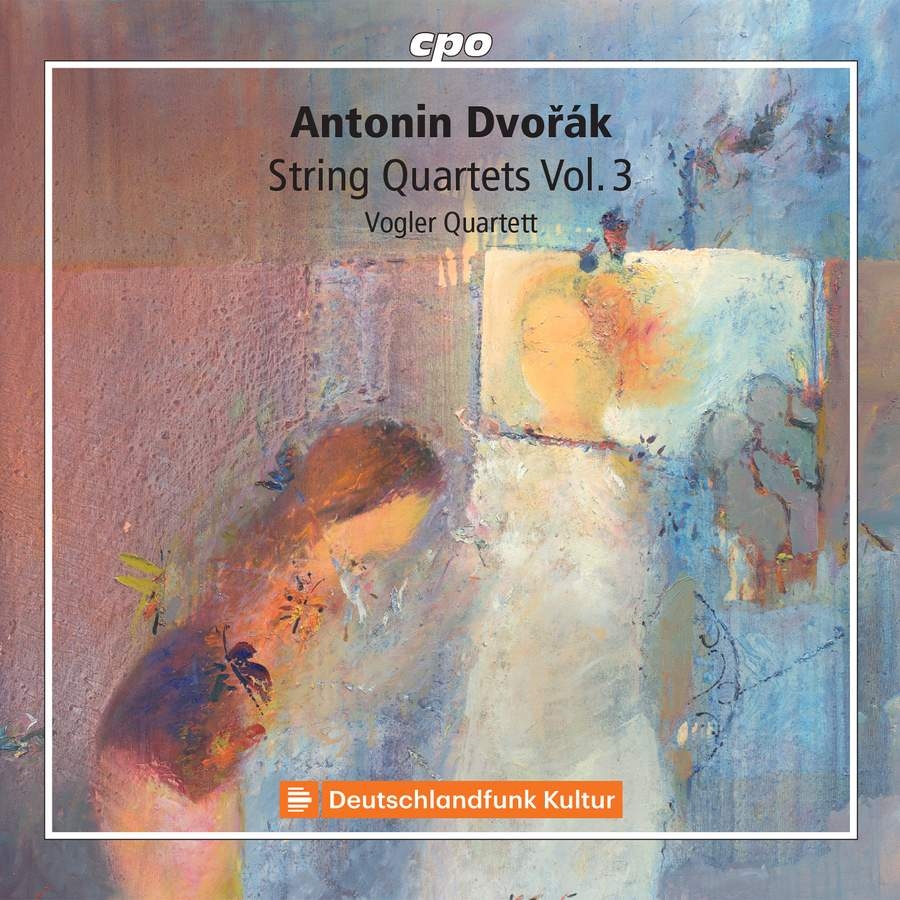
Dvořák: String Quartets Vol. 3 (2CD)
18,00 €
Formát:
CD
Dostupnosť:
na sklade / dostupné okamžite
Katalógové číslo:
777626-2
EAN kód:
761203762620
Autori:
Antonín Dvořák
Interpreti:
Vogler Quartett
Vydavateľ:
CPO
Zoznam skladieb
Dvořák: String Quartet No. 8 in E major, Op. 80Work length 28:53
I. Allegro
II. Andante con moto
III. Allegro scherzando
IV. Finale. Allegro con brio
Dvořák: String Quartet No. 6 in A minor, Op. 12
Work length 32:53
I. Allegro ma non troppo
II. Poco allegro
III. Poco adagio
IV. Allegro molto
Dvořák: String Quartet No. 3 in D major
Work length 1:05:54
I. Allegro con brio
II. Andantino
III. Allegro energico
IV. Finale. Allegretto
Popis
The Vogler Quartet Interprets Dvorák, Vol. 3. Individuality developed and revealed in ensemble performance – herein surely lies the secret of the Vogler Quartet, which has pursued a unique career with an unchanged membership ever since 1985. FonoForum wrote of Vol. 1 of our complete edition featuring all of Dvorák’s quartets, “The Vogler Quartet seeks rich sonority, sharp rhythmic contouring, and warm, earthy colors. In every respect a successful beginning for this complete edition.” Vol. 3 of our edition by these highly acclaimed interpreters, which also includes the String Quintet and Piano Quintet, presents more quartets by Dvorák. His Quartet No. 3 in D major, over sixty minutes in duration, ranks as what is surely one of the most extensive string quartets in the entire literature. The fact that he composed it immediately around the time of the premiere of Wagner’s Meistersinger no doubt also contributed to the work’s expansive dimensions. Dvorák’s String Quartet in E major composed in 1876 belongs to his middle compositional period, during which he did a great deal of experimenting with form and harmony. The slow movement may already be interpreted as a forerunner of later dumka movements. The Ukrainian word dumka – as a Pan-Slavist Dvorák in no way was influenced merely by the folklore of his native country – can be derived from dumatj (“to think”) and means as much as “contemplative melody.” This folk ballad in which songs and dance melodies are linked together is not bound to a particular form. Exciting listening!