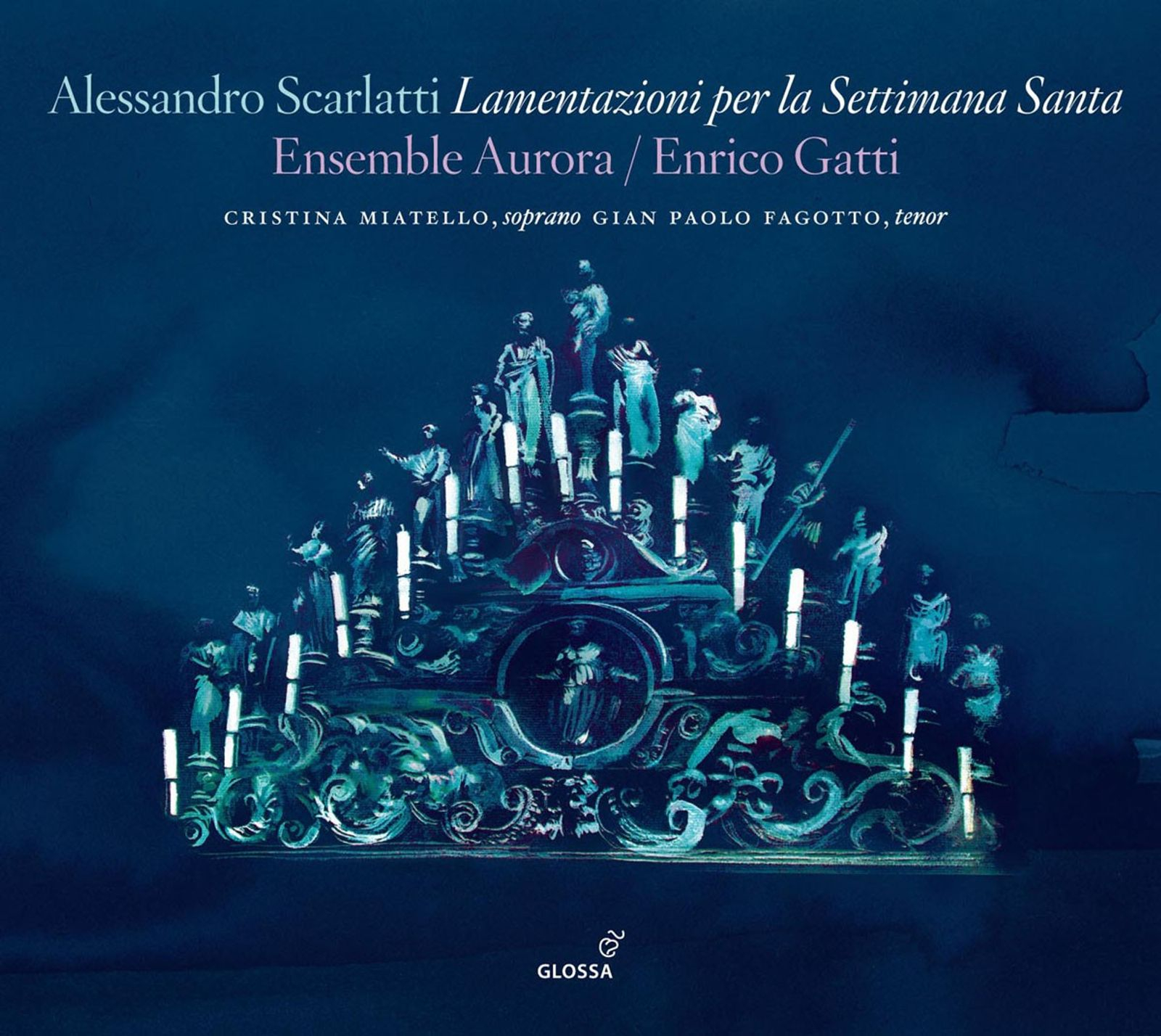
Scarlatti: Lamentazioni per la Settimana Santa (2CD)
18,00 €
Formát:
CD
Dostupnosť:
na sklade / dostupné okamžite
Katalógové číslo:
GCD91205
EAN kód:
8424562212053
Autori:
SCARLATTI Alessandro
Interpreti:
Ensemble Aurora
Vydavateľ:
GLOSSA
Zoznam skladieb
CD 1Lamentazioni per la Settimana Santa
1
Prologus
2
Incipit lamentatio - Aleph: Canon in diapason - Quomodo sedet sola civitas: Largo assai (Lectio Prima Feria V in...)
3
Beth: Canon in sub diapason diapente - Plorans ploravit
4
Ghimel: Canon in diapente - Mogravit Iudas
5
Daleth: Canon in diatesseron - Viae Sion: Largo
6
He: Canon in sub diatesseron - Facti sunt
7
Ierusalem convertere
8
Iod - Manum suam (Lettione del Mercoledì Santo)
9
Caph - Omnis populus: Largo
10
Lamed: Largo - O vos omnes
11
Mem - De excelso: Grave
12
Nun: Largo - Vigilavit iugum: Staccato e grave
13
Ierusalem convertere
14
De Lamentatione: Largo assai - Heth - Cogitavit Dominus (Lectio Prima Feria VI Maioris Hebdomade)
15
Teth - Defixae sunt
16
Iod - Sederunt in terra: Largo
17
Caph - Defecerunt prae lacramis: Largo
18
Ierusalem convertere
CD 2
1
Lamed: Largo - Matribus suis (Lectio Secunda Feria VI in Parasceve)
2
Mem - Cui comparabo
3
Nun - Prophetae tui: Allegro
4
Samech - Plauserunt super te
5
Ierusalem convertere
6
De lamentatione: Largo - Heth: Largo - Misericordiae Domini: Largo (Prima Lettione del Venerdì Santo)
7
Heth - Novi diluculo
8
Heth - Pars mea Dominus
9
Teth - Bonus est viro
10
Iod - Sedebit solitarius: Larghetto
11
Iod - Dabit percutienti: Spiritoso
12
Ierusalem convertere
13
Iod - Ponet in pulvere: Largo
14
Iod - Dabit percutienti: Spiritoso
15
Ierusalem convertere
16
Aleph: Largo - Quomodo obscuratum (Seconda Lettione del Venerdì Santo)
17
Beth - Filii Sion
18
Ghimel - Sed et lamiae
19
Daleth - Adhaesit lingua: Largo
20
He - Qui vescebantur
21
Vau - Et maior
22
Ierusalem convertere
Popis
Alessandro Scarlatti in Italy, like Marc-Antoine Charpentier and later François Couperin in France, brought the musical form of the Lamentations of Jeremiah to a state of dramatic intensity, a complement to the religious ritual which even in the first decade of the 18th century had barely changed since the Middle Ages. One of the special characteristics of Scarlatti’s Lamentations is the skill with which he treats the melodic line, which he reduces to what is bare and essential stylistically, resisting the temptation to indulge himself in operatic writing, preferring instead ‘madrigalistic’ effects.
It was around 1707 that Scarlatti composed his six settings of the Lamentations (two each for the three days leading up to Easter Sunday; although by forming part of the service of Matins they would be sung on the previous evening) and it was not until the Umbrian violinist and director Enrico Gatti went to the Bolognese Eremo di Ronzano with his Ensemble Aurora that these Lamentations received their first complete recording.
The two soloists called upon by Gatti to be backed by his instrumental group (one whom is keyboard player Guido Morini) were soprano Cristina Miatello and tenor Gian Paolo Fagotto. The church music of Alessandro Scarlatti (like his operatic, oratorio and solo cantata work) is receiving increasingly more attention from musicians and the public so the transfer to Glossa of Enrico Gatti’s 1992 recording (including Gatti’s essay on the subject) can be warmly welcomed, as it joins more recent examples of Gatti’s work in Bach and Vivaldi.