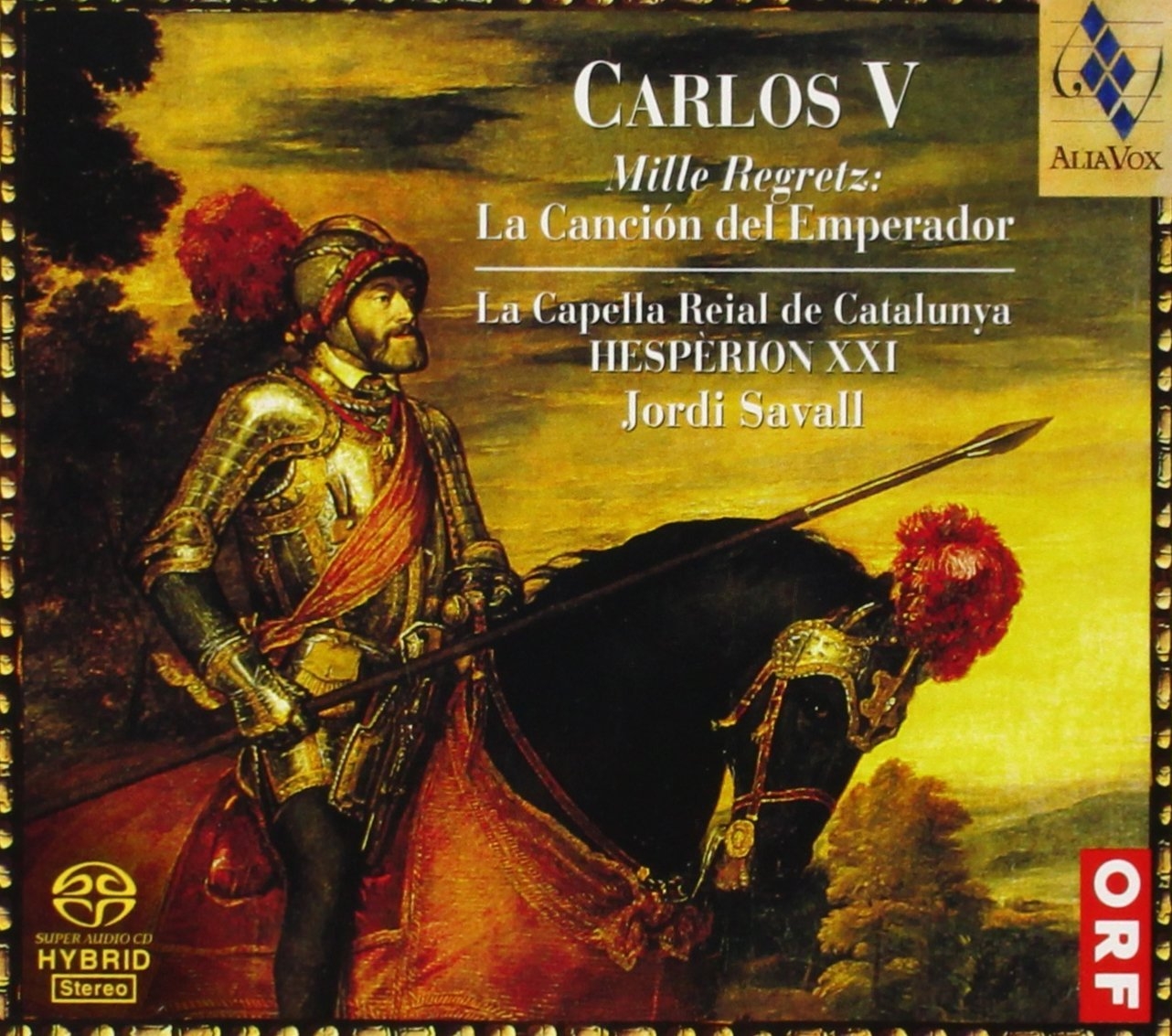
Carlos V - Mille Regretz / Songs of the Emperor (SACD)
20,00 €
Formát:
SACD
Dostupnosť:
na sklade / in stock
Katalógové číslo:
9814
EAN kód:
7619986398143
Autori:
Adrian Willaert, Anonym., Antonio de Cabezon, Clément JANEQUIN, Cristóbal de Morales, Girolamo Parabosco, Heinrich Isaac, Jacques Després, Juan del Encina, Mateo Flecha, Thoinot Arbeau
Interpreti:
Hespèrion XXI, Jordi Savall, La Capella Reial de Catalunya
Vydavateľ:
ALIA VOX
Zoznam skladieb
Carlos V - Mille RegretzSongs of the Emperor
anon.:
Dit le Bourguygnon
Quand je bois du vin clairet
Harto de tanta porfía
Fanfarria
Arbeau:
Belle que tiens ma vie
Cabezón, A:
Diferencias sobre Belle qui tiens ma vie
Despres:
Vive le roy
La Spagna a 5
Mille Regretz
Encina:
Amor con fortuna
Todos los bienes
Flecha I:
Ensalada 'La guerra'
Isaac:
Fortuna desperata: Nasci, pati, mori
Janequin:
Pavana 'La Battaglia'
Morales, C:
Missa 'Mille regretz': Sanctus, Agnus Dei
Jubilate Deo omnis terra
Circumdederunt me gemitus mortis
Parabosco:
Da Pacem Domine
Willaert:
Vecchie letrose
Popis
This is one of the best CDs that Jordi Savall has yet produced. It is an exploration of the life of Charles V through music that was popular at the time and that he would likely have heard. Each track is assigned a year or period along with the most important event that happened, so as to offer a kind of musical timeline of the most powerful man in Europe.
What is particularly attractive about this album is that it offers a true cross-section of music in the Early 16th century, taking a bit from as many different kinds of composition that there were available. For example the tracks "Dit le Bourguygnon", "Vecchie Letrose", "Quand je boi de vin clairet" and "La Spagna" are music that was intended for courtly dance; and which show it through their jovial rythm and catchy refrains. The "Jubilate deo", "Sanctus" and "Mille Regretz" are pieces in High Renaissance polyphony, representing the contrapunctal complexity that was acheived during this period. Savall's rendering of this sacred music is, in my view, more engaging than other recordings since he includes instrumental accompaniment consisting of viols and Sackbutts doubling the voices. This avoids the gloomy and empty feel that one sometimes gets with lesser recordings of Reniassance choral music.
On a final note, it is pleasing to hear that the singers use historically correct pronunciation. For example in the madrigal "Belle qui tiens ma vie" by Thoinot Arbeau, the French is sung as it would have been in the Early Modern period; with "oi" pronounced as "weh", trilled "r"s and the final consonants pronounced when occuring at the end of a line of verse.