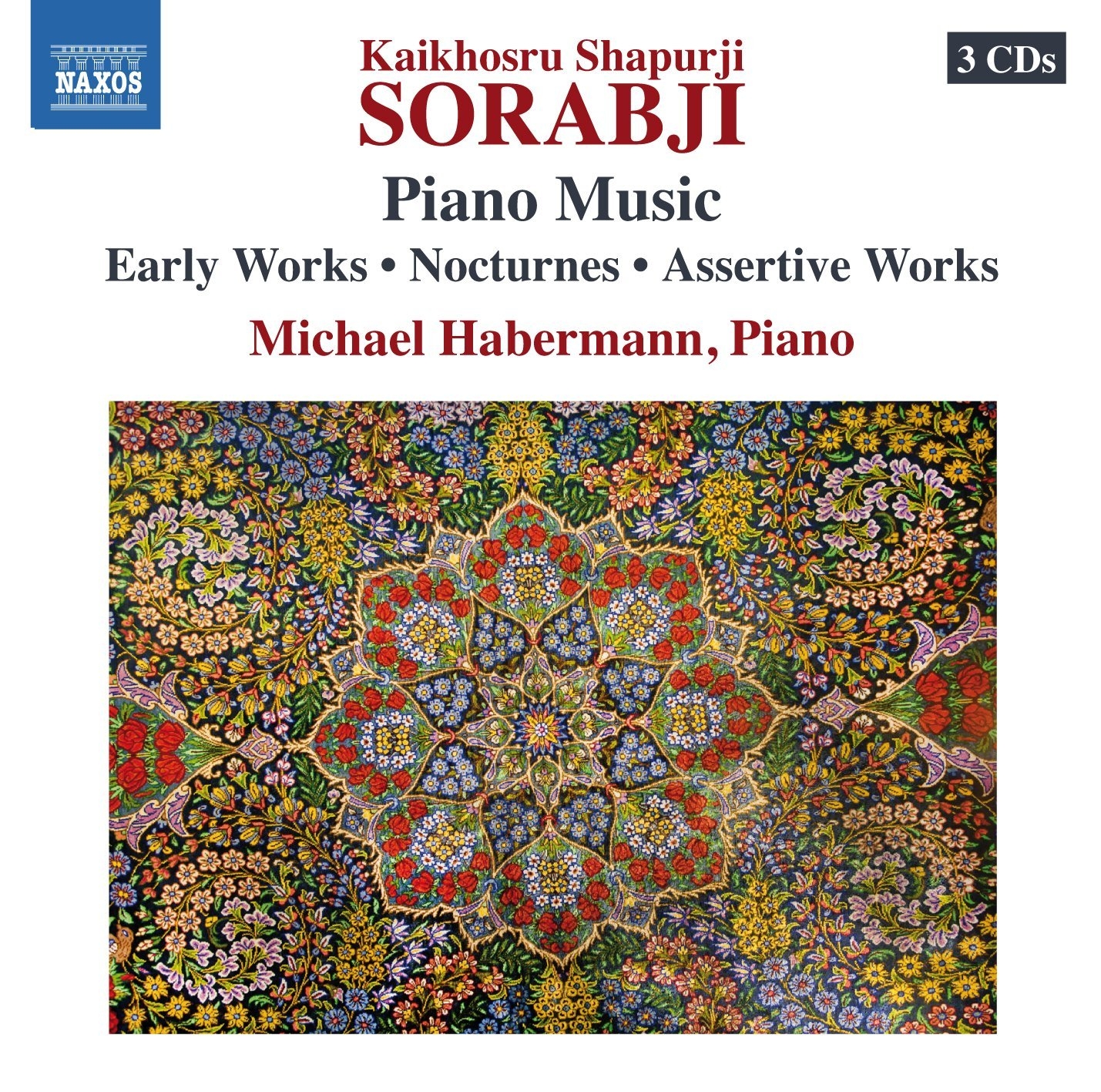
Sorabji: Piano Music (3CD)
18,50 €
Formát:
CD
Dostupnosť:
7-14 dní
Katalógové číslo:
8.571363-6
EAN kód:
0747313136377
Autori:
Kaikhosru Sorabji, Michael Habermann
Interpreti:
Michael Habermann
Vydavateľ:
NAXOS
Zoznam skladieb
Habermann:A la maniere de Sorabji, 'Au clair de la lune'
Sorabji:
In the Hothouse
Tocatta
Fantaisie Espagnole
Valse Fantaisie : Hommage à Johann Strauss
Pastiche on the Hindu Merchant's Song from 'Sadko' by Rimsky-Korsakov
Pastiche: Habanera from Bizet’s Carmen
Pasticcio capriccioso sopra Op. 64 No. 1 (Minute Waltz) dello Chopin
Le jardin parfumé - Poem for Piano
Nocturne: Djâmî
Gulistãn (The Rose Garden), nocturne for piano
Opus clavicembalisticum
Prelude, Interlude and Fugue
Fragment for Harold Rutland
Fantasiettina sul nome illustre dell’egregio poeta Christopher Greive
Quære reliqua hujus materiei inter secretiora”
St. Bertrand de Comminges: “He was laughing in the tower”
Michael Habermann (piano)
Popis
The music of British composer Kaikhosru Shapurji Sorabji will probably always be relegated to relative obscurity. Not too long ago, even while he was still alive (he died in 1988 at the age of 96), live performances of his music were almost unheard of, and only a handful of recordings existed. The chief reason for this low profile was the widely accepted truism that his music, consisting largely of works for solo piano, was so complex and unorthodox that is was essentially unplayable. It didn’t help that Sorabji himself was reclusive, and for a period banned public performances of his work.
Naturally, this kind of mystique and challenge excited a certain sort of super pianist, particularly those with an interest in the harmonic language of the fin de siècle last gasp Romantics, including Godowsky, Busoni, Scriabin, Alkan, and others, composers for whom Sorabji is a natural kinsman. One of the first to pick up the gauntlet was fellow Briton John Ogdon, whose four-hour performance of Opus Clavicembalisticum in 1988 at the Queen Elizabeth Hall is the stuff of legend. Geoffrey Douglas Madge is another pianist well regarded by Sorabji fans, and Marc-André Hamelin, though not well represented by recordings, is also a strong advocate.
Michael Habermann happened upon a Sorabji score in a Mexico City bookstore in 1967, and soon became obsessed with learning the “unplayable” music. He eventually established a long-distance relationship with the composer, who approved of the recordings Habermann sent him, and finally met the elderly composer in person in 1980. The recordings on this three-disc set date back to 1979, and none are more recent than 1995. Many are live recordings, and almost all of the performances are re-releases of two previous editions on the Elan and MusicMasters labels. Having this material in one set, which covers a broad range of Sorabji’s career, is a tremendous gift to both neophytes and Sorabji devotees.
Each of the three discs groups the music into specific categories. The first CD is for “Early Works,” the second consists of three nocturnes, and the third includes “Assertive Works.” I’m not going to give a piece by piece break-down of the program; there is a lot of music here. Much of the early music, from the early 1920s, consists of highly chromatic homages to familiar tunes by Chopin, Strauss, Rimsky-Korsakov, and Bizet, most likely reflecting the influence of Godowsky, who also produced opulent homages to favorite composers. The “assertive” music includes the style that Sorabji is most renowned for, the overwhelming waves of notes that relentlessly crash about one’s sensibilities. There are a number of ways to experience this music; one can marvel at the incredible detail, overflowing with richly colorful embellishment, or simply let the whole thing wash over you, allowing no other distractions.