






Košík
Váš košík je momentálne prázdny.
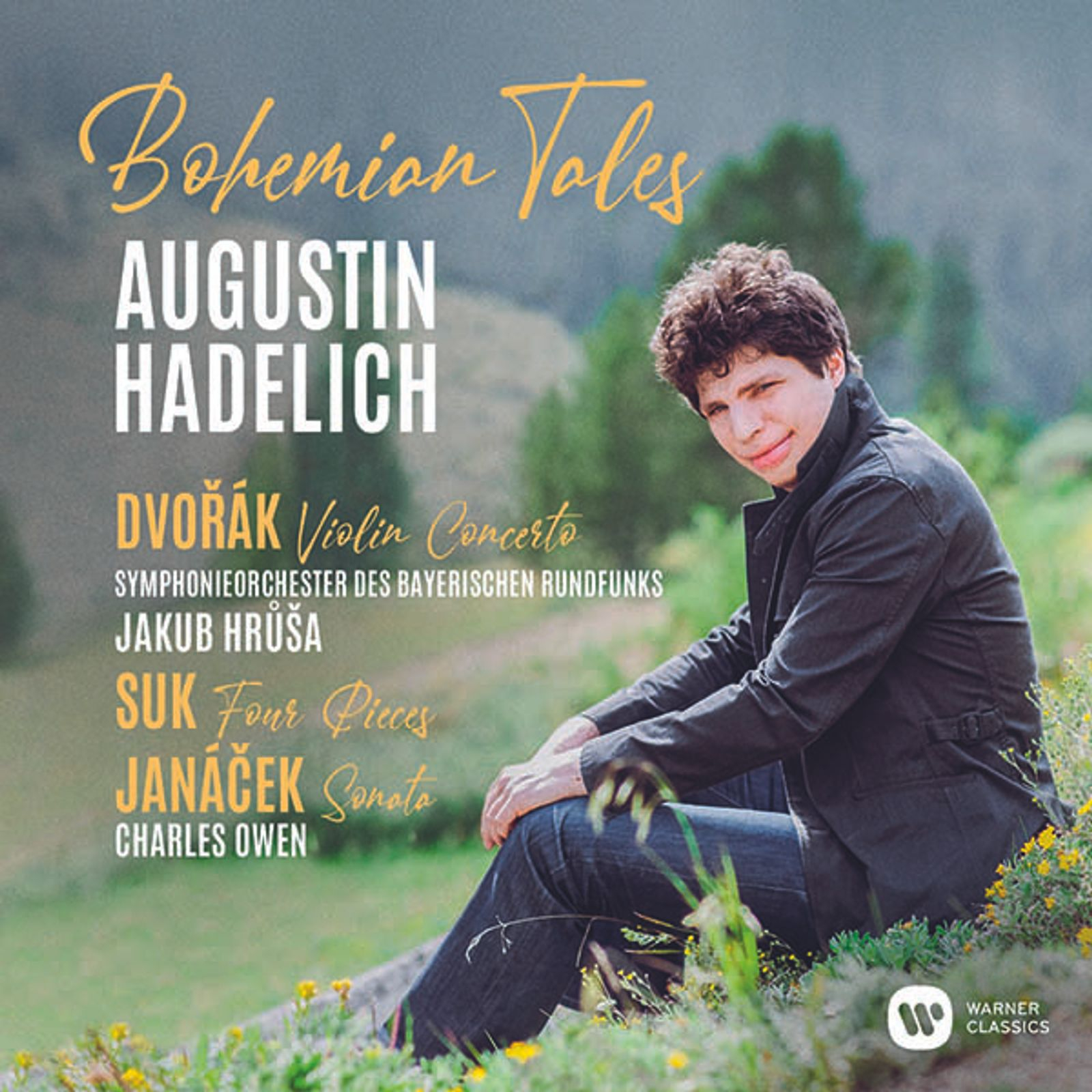
Bohemian Tales - Dvořák / Suk / Janáček (Augustin Hadelich)
17,90 €
Formát:
CD
Dostupnosť:
7-14 dní
EAN kód:
190295274764
Autori:
Antonín Dvořák, Josef Suk, Leoš Janáček
Interpreti:
Augustin Hadelich, Charles Owen, Jakub Hrůša, Symphonieorchester Des Bayerischen Rundfunks
Vydavateľ:
BR Klassik, WARNER CLASSICS
Zoznam skladieb
Antonín DvořákViolin Concerto Op. 53
1 1. Allegro ma non troppo
2 2. Adagio ma non troppo
3 3. Allegro giocoso, ma non troppo
4 Romantic Piece Op. 75/4 Larghetto
Leoš Janáček: Violin Sonata
5 1. Con moto
6 2. Ballade
7 3. Allegretto
8 4. Adagio
Josef Suk: 4 Pieces Op. 17
9 Nr. 1 Quasi ballata
10 Nr. 2 Appassionato
11 Nr. 3 Un poco triste
12 Nr. 4 Burleske
Antonín Dvořák
13 Songs My Mother Taught Me Op. 55/4
14 Humoresque Op. 101/7 (arr. Kreisler)
Popis
It is full of glorious melodies and bursts with opportunities for the soloist to demonstrate a wide range of musical skills - and yet Antonín Dvořák's Violin Concerto still takes second place to his Cello Concerto. Unlike its sister works by Beethoven, Mendelssohn and Brahms (who directly inspired Dvořák), it has never become a true classical music hit. Violinist Augustin Hadelich now brings it into the spotlight together with the Bavarian Radio Symphony Orchestra under Jakub Hrůša - and as a starting point for a journey through Czech music into the 20th century with works by Dvořák, Josef Suk and Leoš Janáček.
For years, Hadelich has toured internationally with the Dvořák Concerto, composed in 1879. He made major appearances in New York, among other places, where he performed - also under Hrůša's direction - with the New York Philharmonic, recalling a composer who had once left Bohemia for the "Big Apple" of the 19th century. "Dvořák was influenced by Brahms and his Violin Concerto, written a year earlier," Hadelich says, "but in terms of structure, it also has much in common with the first Bruch concerto: the improvisatory opening recalls the main character of a story whose narrative begins. The extended slow movement forms its heart, while the finale contains traditional dances such as 'Furiant' or 'Dumka.'" Hadelich, who has also already recorded the Brahms concerto in an outstanding interpretation, continues to spin the influences of the "Bohemian" style with its typical melodies and harmonies - and not only (with pianist Charles Owen) in individual chamber pieces by Dvořák (including the famous Humoresque), but also in the four pieces by Josef Suk - Dvořák's son-in-law. Leoš Janáček's extremely expressive Violin Sonata, composed between 1914 and 1922, spans the Romantic era.Prihlásenie
Newsletter


Copyright 2014-2026 © Hummel Music