






Košík
Váš košík je momentálne prázdny.
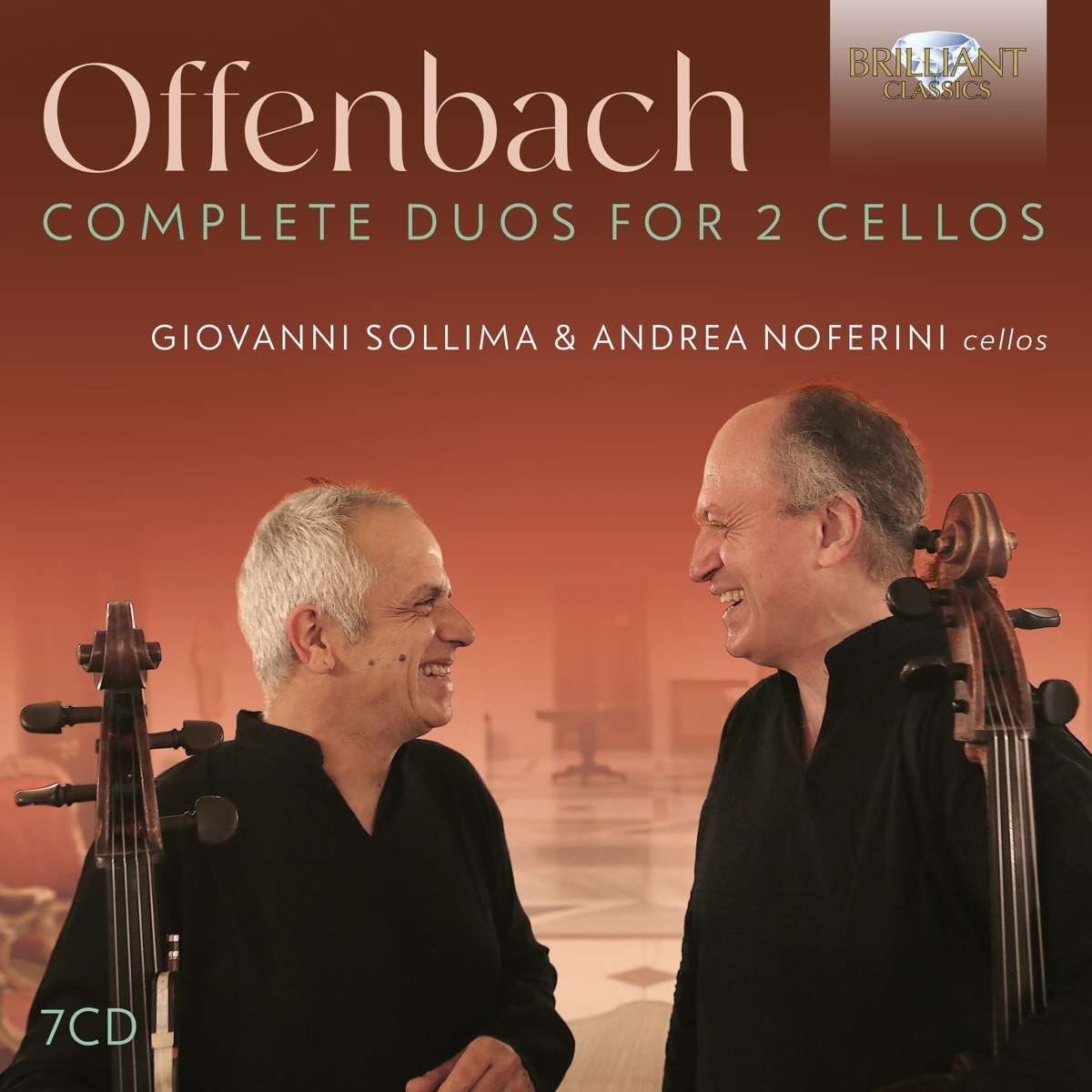
Offenbach: Complete Duos for 2 Cellos (7CD)
44,00 €
Formát:
CD BOX
Dostupnosť:
7-14 dní
Katalógové číslo:
96251
EAN kód:
5028421962511
Autori:
Jacques OFFENBACH
Interpreti:
Andrea Noferini, Giovanni Sollima
Vydavateľ:
BRILLIANT CLASSICS
Zoznam skladieb
CD 1Duos for 2 Cellos, Op. 19 No. 1
1 I. Allegro moderato
2 II. Allegretto
Duos for 2 Cellos, Op. 19 No. 2
3 I. Allegro maestoso
4 II. Andantino
5 III. Minuetto
Duos for 2 Cellos, Op. 19 No. 3
6 I. Largo attacca tema con variazioni I, II & III
7 II. Allegretto
Duos for 2 Cellos, Op. 21 No. 1
8 I. Allegro
9 II. Adagio religioso
10 III. Allegretto
Duos for 2 Cellos, Op. 21 No. 2
11 I. Allegro maestoso
12 II. Cantabile
13 III. Rondò Allegretto
Duos for 2 Cellos, Op. 21 No. 3
14 I. Adagio e variazioni I, II, III andante & IV allegro
15 II. Scherzo
CD 2
Duos for 2 Cellos, Op. 20 No. 1
1 I. Allegro
2 II. Andantino
3 III. Rondò, allegretto
Duos for 2 Cellos, Op. 20 No. 2
4 I. Rondò, allegro non troppo
5 II. Lento
6 III. Rondò, allegretto
Duos for 2 Cellos, Op. 20 No. 3
7 I. Allegro maestoso
8 II. Minuetto
Duos for 2 Cellos, Op. 52 No. 1
9 I. Allegro
10 II. Adagio
11 III. Rondò, allegretto
Duos for 2 Cellos, Op. 52 No. 2
12 I. Allegro maestoso
13 II. Andante
14 III. Scherzo
Duos for 2 Cellos, Op. 52 No. 3
15 I. Tempo di marcia con variazioni I & II
16 II. Adagio
17 III. Movimento di valse
CD 3
Duos for 2 Cellos, Op. 34 No. 1
1 I. Allegro moderato
2 II. Andante
3 III. Allegretto non troppo
Duos for 2 Cellos, Op. 34 No. 2
4 I. Allegro
Duos for 2 Cellos, Op. 34 No. 3
5 I. Allegro moderato
6 II. Andante attacca
7 III. Scherzo, allegro vivace
CD 4
Duos for 2 Cellos, Op. 49 No. 1
1 I. Allegro moderato
2 II. Andante
3 III. Rondò, allegretto
Duos for 2 Cellos, Op. 49 No. 2
4 I. Allegro
5 II. Rondò, allegretto
Duos for 2 Cellos, Op. 49 No. 3
6 I. Allegro moderato
7 II. Adagio
8 III. Allegretto
Duos for 2 Cellos, Op. 49 No. 4
9 I. Allegro
10 II. Rondò, allegretto
Duos for 2 Cellos, Op. 49 No. 5
11 I. Allegro non troppo
12 II. Adagio
13 III. Tempo di menuetto
Duos for 2 Cellos, Op. 49 No. 6
14 I. Allegro maestoso
15 II. Andantino
16 III. Rondò, allegro
Duos for 2 Cellos, Op. 51 No. 1
17 I. Allegro
18 II. Andante
19 III. Allegro
Duos for 2 Cellos, Op. 51 No. 2
20 I. Allegro non troppo
21 II. Cantabile
22 III. Allegretto
Duos for 2 Cellos, Op. 51 No. 3
23 I. Allegro
24 II. Andante
25 III. Allegro non troppo
CD 5
Duos for 2 Cellos, Op. 50 No. 1
1 I. Allegro
2 II. Andante
3 III. Rondò
Duos for 2 Cellos, Op. 50 No. 2
4 I. Allegretto moderato
5 II. Allegretto
Duos for 2 Cellos, Op. 50 No. 3
6 I. Allegro moderato
7 II. Tempo di minuetto, allegro
Duos for 2 Cellos, Op. 50 No. 4
8 I. Maestoso
9 II. Andante
10 III. Allegretto
Duos for 2 Cellos, Op. 50 No. 5
11 I. Allegro non troppo
12 II. Allegretto
Duos for 2 Cellos, Op. 50 No. 6
13 I. Allegro non troppo
14 II. Andante
15 III. Rondò, allegretto
12 Ètudes, Op. 78
16 I. Moderato
17 III. Andante
18 IV. Moderato
19 VII. Andante
20 IX. Lento non troppo
21 XI. Allegro scherzando
CD 6
Duos for 2 Cellos, Op. 53 No. 1
1 I. Allegro
2 II. Adagio
3 III. Rondò, allegro
Duos for 2 Cellos, Op. 53 No. 2
4 I. Allegro attacca
5 II. Andante attacca
6 III. Allegro
Duos for 2 Cellos, Op. 53 No. 3
7 I. Allegro moderato
8 II. Andante
9 III. Rondò, allegretto
12 Ètudes, Op. 78
10 II. Allegretto
11 IV. Allegro
12 VI. Allegro scherzando
13 VIII.
14 X. Allegro marciale
15 XII. Maestoso
CD 7
Duos for 2 Cellos, Op. 54 No. 1
1 I. Allegro non troppo
2 II. Adagio religioso
3 III. Rondò, allegretto
Duos for 2 Cellos, Op. 54 No. 2
4 I. Allegro
5 II. Andante
6 III. Polonaise
Duos for 2 Cellos, Op. 54 No. 3
7 I. Adagio attacca
8 II. Allegro maestoso
9 III. Allegro vivo
Popis
Years before he took Paris by storm as a brilliantly witty composer of operettas, Offenbach was celebrated across Europe as a virtuoso cellist. It is this lesser-known aspect of his creative personality that is explored by Giovanni Sollima and Andrea Noferini, who have spent years immersing themselves in the technically intricate but always lyrical and extrovert pieces which Offenbach wrote for his instrument. Having learned the violin and cello as a child, Offenbach studied at the Paris Conservatoire, and soon secured a position in the orchestra of the Opéra-Comique. He spent much of the 1840s as a virtuoso cellist touring Europe, including appearances in London and at Windsor where he entertained during the Ascot week banquet. The greater part of this collection, which includes many world-premiere recordings, is taken up with Offenbach’s Cours Méthodique de duos pour deux violoncelles: a ‘progressive’ course of musical instruction for pupil and teacher to play together, arranged in order of increasing difficulty. However, these studies are far from dryly didactic in character. They include imitations of hymns, choruses, funeral marches and the sound of other instruments, such as a tuba or a French horn. Following up the success of a 2CD selection (94475) from this little-known box of delights, Giovanni Sollima and Andrea Noferini present Offenbach’s entire output, which ventures far beyond the course of studies to include fantasias and transcriptions based on the most popular operas and operettas of his day. The full character of the composer is captured by Sollima and Noferini: his delight in life, his observation of all its passing pleasures and frustrations; his irrepressible sense of humour. Cellists and lovers of 19th-century rarities alike will want to investigate this ambitious survey, and discover for themselves the hidden side of Jacques Offenbach.Prihlásenie
Newsletter


Copyright 2014-2026 © Hummel Music