










Košík
Váš košík je momentálne prázdny.
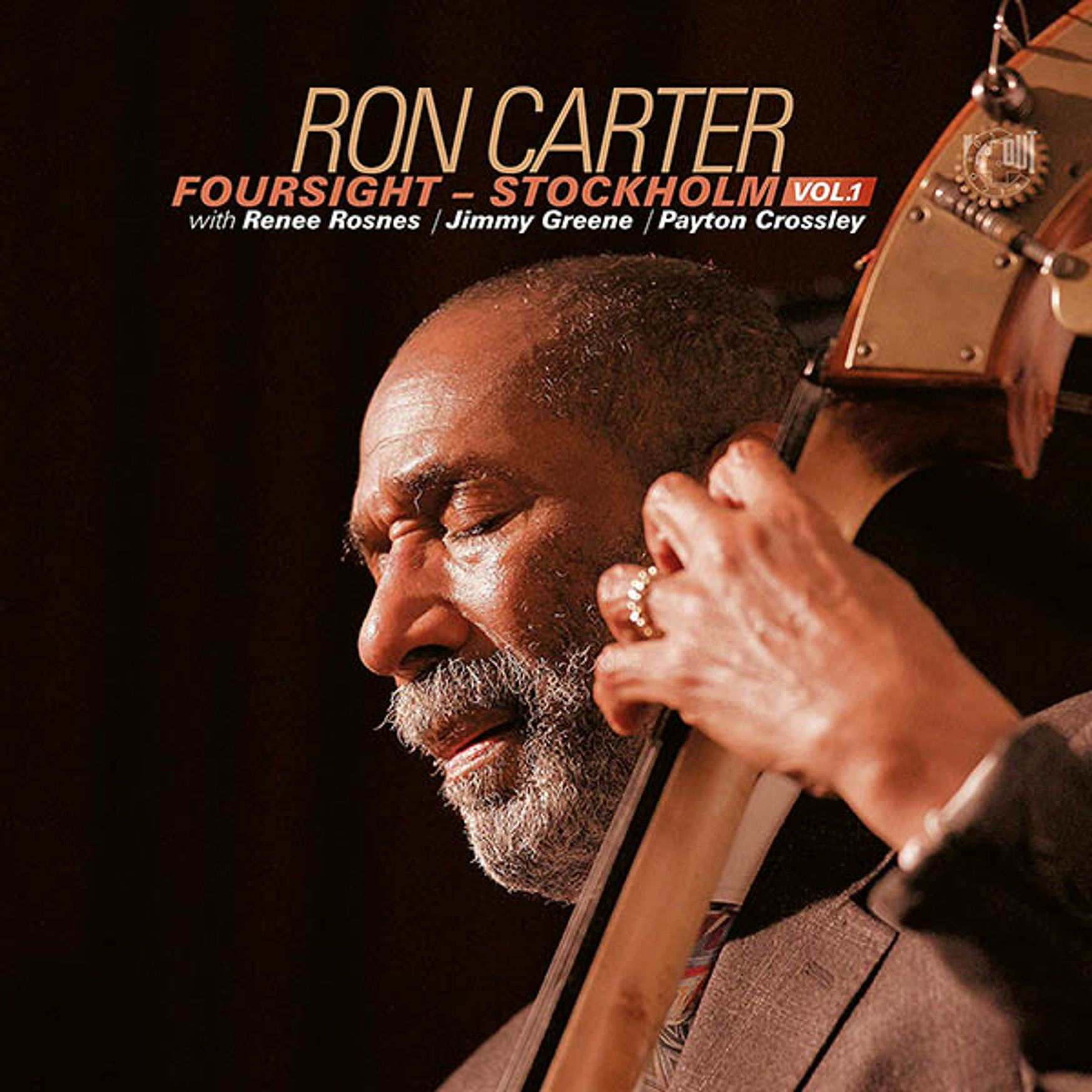
Ron Carter: Foursight - Stockholm (Vol. 1)
18,00 €
Formát:
CD
Dostupnosť:
na sklade / dostupné okamžite
Katalógové číslo:
IOR77139-2
EAN kód:
798747713924
Autori:
Arthur Schwartz, Howard Dietz, MILES DAVIS, Ron Carter, Victor Feldman
Interpreti:
Jimmy Greene, Payton Crossley, Renee Rosnes, Ron Carter
Vydavateľ:
In+Out Records
Zoznam skladieb
1 Cominando2 Joshua
3 Little Waltz
4 Seguaro
5 Cominando, Reprise
6 Nearly
7 You and the Night and the Music
Popis
The strings vibrate gently. Precise tone, unconditionally clear. And quiet. The longest fingers in jazz dance seemingly weightlessly along the wooden bridge; sinewy, delicate and elegant. No one else sounds like Ron Carter. His double bass often produces a crisp groove like an electric bass, and yet it is always clearly definable as the sound of a classical instrument. Then the sound swells irresistibly under the scorpion-like hands. Payton Crossley subtly caresses the cymbals, and Jimmy Green, the "new guy" on tenor saxophone, and pianist Renee Rosnes push the chorus onto the finely crocheted rhythm blanket. "With us, nobody knows exactly what's going to happen when," says Carter, praising the Foursight Quartet's unique selling point. "That's why every concert is a real challenge. We almost always play for 35 to 40 minutes at a time at the beginning. No breaks, just slight changes that indicate the start of a new song. If we were a classical formation, it would be described as a five-movement symphony. That only works with this band!"
In this case, the movements are called "Cominando", a crackling hard bop structure that transports the spirit of the 1960s into the 21st century in just a few bars. Joshua", his reminiscence of his old friend and partner Miles Davis, whom he assisted for many years in his quintet, grounding and organizing the high-flying of the other soloists with subtle interjections, the dreamy "Little Waltz", the cheerful "Seguaro" and a short reprise of "Cominando". Carter sees himself as a monitor for the creative energies, as a gentle, inconspicuous navigator whose pulse sets the direction, but who would never destroy the fantasy, the momentum of the momentum with an ego attack. Sometimes in motionless amazement, sometimes full of enthusiasm and in any case willingly, the audience at the Stockholm jazz club "Fasching" on November 17, 2018 allowed themselves to be guided to the destinations that the gentleman on the bass headed for with Rosnes, Greene and Crossley. With the blues "Nearly", the quartet recalled the late pianist Geri Allen, and with the lively "You And the Night And the Music", Chet Baker, the antipodean of Miles Davis. Ron Carter also played with him. The question should be asked differently: Who didn't he actually play with?
"You must never overdo it on a live recording," warns the master of whispering tones, whose bass sound can now be heard on almost 3000 recordings, with a charming smile. "It's like having to give a private concert in your living room. Or we could be a chamber music ensemble that develops the power of a large orchestra without leaving a certain volume level. There's no doubt that we achieved this in Stockholm. I really love this CD!" This reflects both the knowledge gained from many decades in countless bands of all kinds and the undisguised joy that an old warhorse like him can still improve even in the autumn of his unparalleled career. Ron Carter has played in the most prestigious venues and the wildest jazz clubs. The man who finally dragged the double bass out of the dingy corner of the background instrument knows that jazz can also be a struggle with ambient noise. Especially in clubs. Clinking glasses in row four, a throat-clearing noise in row one, the squeak of a toilet door somewhere in the back - the 82-year-old, who is amazingly young at heart, is always extremely relaxed about these interventions of reality in the art of sound. Even in the loud "Fasching". If it gets too loud at the back, he just plays a little quieter at the front. Until everything sorts itself out again.
Because this wooden body in the middle of the stage leads a life alongside the classic walking bass like no other in the guild - without neglecting the walking. Patiently, thoughtfully and with all his natural authority, he and his owner put things in order, make connections and explain the course of life with a few concise notes. Carter's own solos move away from unrestrained expression. The magic of the evening lies in the reduction. Not a note too many, preferring to let the pauses breathe. The music continues to hum in our heads, even when he no longer produces any notes and only moves his sinewy fingers playfully in the air.
All the power slumbers just beneath the thin surface. It crackles incessantly without ever really exploding. The longer "Stockholm Vol. 1" spins in the player, the more hauntingly the CD exudes the timeless aroma of the Cannonball Adderley live classic "In New York" or Stanley Turrentine's legendary "Up At Mintons" album - albeit with much better acoustics. No nostalgia, but the renaissance of good, noble, fine taste. Because a bassist is calling the shots. "Many of my colleagues still concentrate on their solos. I concentrate on the music and on that very special moment. When I reach it, I'm happy every time!" The zenith as a permanent state.
Reinhard Köchl, May 2019Prihlásenie
Newsletter


Copyright 2014-2026 © Hummel Music